Revisit content from World Brewing Congress 2024 with the all-new WBC Rewind, featuring:
Audio recordings from scientific sessions and technical session presentations
Slide decks from scientific sessions and technical session presentations
PDFs of posters
Photo Album featuring moments from the conference
Exclusive podcast episodes featuring one-on-one interviews with industry experts
Core Concept recordings
Hop Flavor and Aroma: Proceedings of the 2nd International Brewers Symposium
This timely book summarizes the current scientific understanding of hop flavor and aroma with contributions from the world's leading hop scientists. This book is a joint publication of ASBC and MBAA.
Hop Flavor and Aroma: Proceedings of the 2nd International Brewers Symposium
This timely book summarizes the current scientific understanding of hop flavor and aroma with contributions from the world’s leading hop scientists.
As interest in hops continues to rise and brewers approach hops in unprecedented ways, many in the brewing world are seeking the latest research and guidance to help them create better beer. This comprehensive book presents the industry’s current understanding of hop chemistry as it relates to beer flavor.
Hop Flavor and Aroma begins with a historical overview of hop flavor research and then examines thiols, a powerful class of odorants for hop aromas; hop oil characterization and recombination to create beer flavor; hop cultivation and its impact on hops and beer quality; and the genetics of breeding new hop varieties. The book also discusses the difficulties of adapting research analytical methods for QC practices and the impact of dry hopping on beer flavor and bitterness.
Hop Flavor and Aroma documents the significant scientific progress that was made during the 10 years between the 1st and 2nd International Brewers Symposia. The world’s leading hop researchers gathered at the second symposium, sharing their knowledge and summarizing their research contributions to the industry’s understanding of hop aroma and flavor. Contributors and topics were curated by editors Thomas H. Shellhammer and Scott R. Lafontaine to achieve a specific breadth and depth on hop flavor and aroma.
Many in the brewing industry—from flavor chemists and sensory scientists to hop growers and brewing raw material specialists—will be informed by this book. It will feed the interest of anyone seeking a scientific understanding of what drives hoppy aroma in beer.
Craft Brewer's Guide To Best Practices
The Craft Brewer's Guide to Best Practices Volume 1: Management, Regulation, and Brewery Design
By Karl Ockert This book provides information to help readers design, build, and run a craft brewery to consistently make high-quality beer.
The Craft Brewer's Guide to Best Practices Volume 1: Management, Regulation, and Brewery Design
The Craft Brewer’s Guide to Best Practices—written by Karl Ockert, lead editor of Master Brewers’ bestselling series Practical Handbook for the Specialty Brewer—provides information to help readers design, build, and run a craft brewery to consistently make high-quality beer. Presented in an accessible question-and-answer format, these books cover subjects and current practices relevant to craft brewers everywhere. Based on his wide-ranging experience, Ockert provides information and insights that are not found in other brewing guides and textbooks.
Volume 1: Management, Regulation, and Brewery Design provides practical, real-life answers to technical questions on an array of topics crucial for successful craft brewing:
The human, operational, and business sides of the brewery operation
The regulatory and applied concepts of personal safety
How to assemble and run a quality management program that fits your brewery
Food safety fundamentals to comply with requirements of the Food Safety Modernization Act
Key aspects of selecting a building site and constructing a hygienic operation
What to look for in selecting or designing brewing tanks and equipment
Who will benefit from reading this book?
Anyone looking to start or maintain a career in craft brewing
Personnel in manually operated craft brewpubs and breweries (although many of the concepts can be applied universally to a brewery of any size)
Brewing and malting science educators and students
Technical staff and other professionals in industries related to brewing and fermentation
The Craft Brewer’s Guide to Best Practices Volume 2: Raw Materials, Wort Production, and Fermentation
By Karl Ockert This book provides information to help readers design, build, and run a craft brewery to consistently make high-quality beer.
The Craft Brewer’s Guide to Best Practices Volume 2: Raw Materials, Wort Production, and Fermentation
The Craft Brewer’s Guide to Best Practices—written by Karl Ockert, lead editor of Master Brewers’ bestselling series Practical Handbook for the Specialty Brewer—provides information to help readers design, build, and run a craft brewery to consistently make high-quality beer. Presented in an accessible question-and-answer format, these books cover subjects and current practices relevant to craft brewers everywhere. Based on his wide-ranging experience, Ockert provides information and insights that are not found in other brewing guides and textbooks.
Volume 2: Raw Materials, Wort Production, and Fermentation provides practical, real-life answers to technical questions on an array of topics crucial for successful craft brewing:
Selecting suppliers, contracting for packaging and raw materials, and managing the supply chain
Practical applications for cleaning and sanitizing brewery tanks and equipment
Techniques and methods used in producing sweet wort in the brewhouse
Production techniques for boiled wort, including cool pooling, hot side high gravity brewing, and whirlpool hopping
In-depth discussions of both traditional and modernized methods of ale and lager fermentation and beer maturation
Who will benefit from reading this book?
Anyone looking to start or maintain a career in craft brewing
Personnel in manually operated craft brewpubs and breweries (although many of the concepts can be applied universally to a brewery of any size)
Brewing and malting science educators and students
Technical staff and other professionals in industries related to brewing and fermentation
The Craft Brewer’s Guide to Best Practices Volume 3: Dry Hopping, Sours and Funky Beer Production, Packaging, and Utilities
By Karl Ockert This book provides information to help readers design, build, and run a craft brewery to consistently make high-quality beer.
The Craft Brewer’s Guide to Best Practices Volume 3: Dry Hopping, Sours and Funky Beer Production, Packaging, and Utilities
he Craft Brewer’s Guide to Best Practices—written by Karl Ockert, lead editor of Master Brewers’ bestselling series Practical Handbook for the Specialty Brewer—provides information to help readers design, build, and run a craft brewery to consistently make high-quality beer. Presented in an accessible question-and-answer format, these books cover subjects and current practices relevant to craft brewers everywhere. Based on his wide-ranging experience, Ockert provides information and insights that are not found in other brewing guides and textbooks.
Volume 3: Dry Hopping, Sours and Funky Beer Production, Packaging, and Utilities provides practical, real-life answers to technical questions on an array of topics crucial for successful craft brewing:
Techniques for developing hop flavor in the brewhouse and cellars and mitigation for hop creep
Production and wood aging techniques to produce saisons, sours, funky, and flavored beers
Preparation methods and materials for finishing the matured beer for packaging
Packaging beer into kegs and serving tanks and draft system design, care, and upkeep
Packaging line design and packaging beer into cans and bottles using rotary and inline filling equipment
Using a proactive maintenance program and understanding key plant utility systems
Who will benefit from reading this book?
Anyone looking to start or maintain a career in craft brewing
Personnel in manually operated craft brewpubs and breweries (although many of the concepts can be applied universally to a brewery of any size)
Brewing and malting science educators and students
Technical staff and other professionals in industries related to brewing and fermentation
The Craft Brewer’s Guide to Best Practices Volume 4: Standard Operating Procedures
By Karl Ockert This book provides information to help readers design, build, and run a craft brewery to consistently make high-quality beer.
The Craft Brewer’s Guide to Best Practices Volume 4: Standard Operating Procedures
The Craft Brewer’s Guide to Best Practices—written by Karl Ockert, lead editor of Master Brewers’ bestselling series Practical Handbook for the Specialty Brewer—provides information to help readers design, build, and run a craft brewery to consistently make high-quality beer. Presented in an accessible question-and-answer format, these books cover subjects and current practices relevant to craft brewers everywhere. Based on his wide-ranging experience, Ockert provides information and insights that are not found in other brewing guides and textbooks.
Volume 4: Standard Operating Procedures describes SOPs for key procedures to bring consistency in producing world-class craft-brewed beers in your brewery:
An introduction to SOPs, including how to write an SOP and produce an SOP manual Fundamental SOPs in the warehouse, brewhouse, tank cellar, wood barrel cellar, finishing, and packaging areas (including both operational and cleaning/sanitizing procedures) that can be adapted to any brewery Drawings of several setups for easy visual reference Who will benefit from reading this book?
Anyone looking to start or maintain a career in craft brewing Personnel in manually operated craft brewpubs and breweries (although many of the concepts can be applied universally to a brewery of any size) Brewing and malting science educators and students Technical staff and other professionals in industries related to brewing and fermentation
The Craft Brewer’s Guide to Best Practices, Volumes 1–4
By Karl Ockert Set of four comprehensive handbooks offering craft brewers information that is current, practical, and relevant to operations of their scale.
The Craft Brewer’s Guide to Best Practices, Volumes 1–4
The Craft Brewer’s Guide to Best Practices—written by Karl Ockert, lead editor of Master Brewers’ bestselling series Practical Handbook for the Specialty Brewer—provides information to help readers design, build, and run a craft brewery to consistently make high-quality beer. Presented in an accessible question-and-answer format, these books cover subjects and current practices relevant to craft brewers everywhere. Based on his wide-ranging experience, Ockert provides information and insights that are not found in other brewing guides and textbooks.
Volume 4: Standard Operating Procedures describes SOPs for key procedures to bring consistency in producing world-class craft-brewed beers in your brewery:
An introduction to SOPs, including how to write an SOP and produce an SOP manual
Fundamental SOPs in the warehouse, brewhouse, tank cellar, wood barrel cellar, -finishing, and packaging areas (including both operational and cleaning/sanitizing procedures) that can be adapted to any brewery
Drawings of several setups for easy visual reference
Who will benefit from reading this book?
Anyone looking to start or maintain a career in craft brewing
Personnel in manually operated craft brewpubs and breweries (although many of the concepts can be applied universally to a brewery of any size)
Brewing and malting science educators and students
Technical staff and other professionals in industries related to brewing and fermentation
Key Brewing References
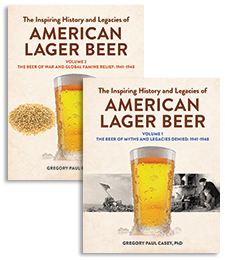
The Inspiring History and Legacies of American Lager Beer, Volume 2: The Beer of War and Global Famine Relief: 1941–1948
By Gregory Paul Casey The series examines the history of the American lager brewing between the 1840s and the 1940s. A period and a beer little studied by historians, the political, societal, and cultural history of the United States profoundly influenced the evolution of American adjunct lager beer.
The Inspiring History and Legacies of American Lager Beer, Volume 2: The Beer of War and Global Famine Relief: 1941–1948
The Beer of War and Global Famine Relief: 1941–1948 is the second book in a one-of-a-kind, five-volume series, The Inspiring History and Legacies of American Lager Beer, which details the unlikely rise of American adjunct lager beer, as told by industry expert Greg Casey. The author has compiled more than 17,000 period references, with sources as varied as the Library of Congress to interviews with contemporary descendants. The series examines the history of American lager brewing between the 1840s and the 1940s. A period and a beer little studied by historians, the political, societal, and cultural history of the United States profoundly influenced the evolution of American adjunct lager beer. This series is the result of Casey’s 16 years of passionate self-directed and self-funded research.
During World War II, the brewing industry faced unprecedented challenges as wartime shortages affected key ingredients such as corn, which breweries like Pabst had relied on since the late 19th century as a preferred adjunct. These shortages spurred innovations and adaptations that reshaped the industry’s approach to brewing, debunking the long-standing myth that adjuncts such as corn were a wartime necessity born of malt shortages. Instead, as Greg Casey explores in depth, these adjustments exemplify the resilience and resourcefulness of American brewers during one of history’s most trying eras.
With impressive forewords from Ken Grossman (Founder, Owner, and President of Sierra Nevada Brewing Company) and Richard L. Yuengling, Jr. (President and CEO of D. G. Yuengling & Son, Inc.), this second volume, The Beer of War and Global Famine Relief: 1941–1948, transitions to an archivally based review of the actual history of this period of the American lager brewing industry—a story of perseverance and the embodiment of the American dream, which the author hopes each reader finds not only surprising but also inspiring.
The stories told in The Inspiring History and Legacies of American Lager Beer will be of interest and value to a diverse audience: readers interested in the history of the United States or World War II, American craft brewers or employees of macro lager breweries, and even those who simply enjoy drinking American lager and craft beers. All readers are guaranteed a newfound pride, knowledge, and appreciation for the perseverance of American adjunct lager beer.
The Inspiring History and Legacies of American Lager Beer, Volume 1: The Beer of Myths and Legacies Denied: 1941–1948
By Gregory Paul Casey The series examines the history of the American lager brewing between the 1840s and the 1940s. A period and a beer little studied by historians, the political, societal, and cultural history of the United States profoundly influenced the evolution of American adjunct lager beer.
The Inspiring History and Legacies of American Lager Beer, Volume 1: The Beer of Myths and Legacies Denied: 1941–1948
The Beer of Myths and Legacies Denied: 1941–1948 is the first book in a one-of-a-kind, five-volume series, The Inspiring History and Legacies of American Lager Beer, which details the unlikely rise of American adjunct lager beer, as told by industry expert Greg Casey. The author has compiled more than 17,000 period references, with sources as varied as the Library of Congress to interviews with contemporary descendants. The series examines the history of American lager brewing between the 1840s and the 1940s. A period and a beer little studied by historians, the political, societal, and cultural history of the United States profoundly influenced the evolution of American adjunct lager beer. This series is the result of Casey’s 16 years of passionate self-directed and self-funded research.
With impressive forewords from Ken Grossman (Founder, Owner, and President of Sierra Nevada Brewing Company) and Richard L. Yuengling, Jr. (President and CEO of D. G. Yuengling & Son, Inc.), The Beer of Myths and Legacies Denied: 1941–1948 follows a “who, what, where, when, and why” format to dissect the many myths that shroud the conception of American adjunct lager beer and thus uncover the true histories and voices that were once buried. The author reviews and explores the remarkable parallels between the first half-centuries of the history of the American lager brewing industry (1870s–1910s) and today’s craft brewing industry (1980s–2020s)—presenting readers with a living history of this era. This book is not a droll collection of statistics or a numbing array of technical jargon or a trade-centric emphasis on brewing science and technology but rather an emphasis placed on the people whose lives pulsate throughout the series.
The stories told in The Inspiring History and Legacies of American Lager Beer will be of interest and value to a diverse audience: readers interested in the history of the United States or World War II, American craft brewers or employees of macro lager breweries, and even those who simply enjoy drinking American lager and craft beers. All readers are guaranteed a newfound pride, knowledge, and appreciation for the perseverance of American adjunct lager beer.
The Inspiring History and Legacies of American Lager Beer, Volume 2: The Beer of War and Global Famine Relief: 1941–1948 and The Inspiring History and Legacies of American Lager Beer, Volume 1: The Beer of Myths and Legacies Denied: 1941–1948
By Gregory Paul Casey The series examines the history of the American lager brewing between the 1840s and the 1940s. A period and a beer little studied by historians, the political, societal, and cultural history of the United States profoundly influenced the evolution of American adjunct lager beer.
The Inspiring History and Legacies of American Lager Beer, Volume 2: The Beer of War and Global Famine Relief: 1941–1948 and The Inspiring History and Legacies of American Lager Beer, Volume 1: The Beer of Myths and Legacies Denied: 1941–1948
The Beer of Myths and Legacies Denied: 1941–1948 and The Beer of War and Global Famine Relief: 1941–1948 are the first two books in the one-of-a-kind, five-volume series, The Inspiring History and Legacies of American Lager Beer, which details the unlikely rise of American adjunct lager beer, as told by industry expert Greg Casey. The author has compiled more than 17,000 period references, with sources as varied as the Library of Congress to interviews with contemporary descendants. The series examines the history of American lager brewing between the 1840s and the 1940s. A period and a beer little studied by historians, the political, societal, and cultural history of the United States profoundly influenced the evolution of American adjunct lager beer. This series is the result of Casey’s 16 years of passionate self-directed and self-funded research.
Volume 1: The Beer of Myths and Legacies Denied: 1941–1948 follows a “who, what, where, when, and why” format to dissect the many myths that shroud the conception of American adjunct lager beer and thus uncover the true histories and voices that were once buried. The author reviews and explores the remarkable parallels between the first half-centuries of the history of the American lager brewing industry (1870s–1910s) and today’s craft brewing industry (1980s–2020s)—presenting readers with a living history of this era. This book is not a droll collection of statistics or a numbing array of technical jargon or a trade-centric emphasis on brewing science and technology but rather an emphasis placed on the people whose lives pulsate throughout the series.
During World War II, the brewing industry faced unprecedented challenges as wartime shortages affected key ingredients such as corn, which breweries like Pabst had relied on since the late 19th century as a preferred adjunct. These shortages spurred innovations and adaptations that reshaped the industry’s approach to brewing, debunking the long-standing myth that adjuncts such as corn were a wartime necessity born of malt shortages. Volume 2: The Beer of War and Global Famine Relief: 1941–1948, transitions to an archivally based review of the actual history of this period of the American lager brewing industry—a story of perseverance and the embodiment of the American dream, which the author hopes each reader finds not only surprising but also inspiring.
Volumes 1 and 2 feature impressive forewords from Ken Grossman (Founder, Owner, and President of Sierra Nevada Brewing Company) and Richard L. Yuengling, Jr. (President and CEO of D. G. Yuengling & Son, Inc.).
The stories told in The Inspiring History and Legacies of American Lager Beer will be of interest and value to a diverse audience: readers interested in the history of the United States or World War II, American craft brewers or employees of macro lager breweries, and even those who simply enjoy drinking American lager and craft beers. All readers are guaranteed a newfound pride, knowledge, and appreciation for the perseverance of American adjunct lager beer.
Brewery Safety: Principles, Processes, and People
By Matt Stinchfield From physical trauma to chemical irritations, biological hazards to psychosocial hazards, Brewery Safety explores in-depth how to think about and avoid these hazards.
Brewers of all sizes should uphold the value of safety alongside their edgy brands and creative and carefully crafted beers and other beverages. It’s the responsibility of all brewery employees to assess hazards, learn how to control or eliminate them, and to document and train each other on the safest ways to perform tasks. It’s not just about government regulation, but it is also about making your brewery the best brewery possible—for your beer, your staff, and your visitors.
Breweries face hazards that can be divided into physical, chemical, biological, ergonomic, and psychosocial hazards. Learning to address these aspects of safety to ensure a safe product and working environment is paramount. From physical trauma to chemical irritations, biological hazards to psychosocial hazards, Brewery Safety explores in-depth how to think about and avoid these hazards. Brewers will learn to evaluate, educate, and execute safety conscious measures to ensure that the working environment, welfare of staff, and the quality of the product are first and foremost.
Scientific Principles of Malting and Brewing, Second Edition
By Charles W. Bamforth and Glen P. Fox This book explains the science underpinning each stage of the brewing and malting process, expanding on the previous edition content in greater detail.
Scientific Principles of Malting and Brewing, Second Edition
Brewing is the ultimate biotechnology, using living organisms to produce a valuable resource for the enjoyment of its consumer. The complex science behind this process has been distilled into a new edition of the ASBC bestseller Scientific Principles of Malting and Brewing: a guide to fundamental malting and brewing science and technologies.
Charles W. Bamforth, author of the successful first edition, is joined by coauthor Glen P. Fox in this extended and reorganized book. As internationally acclaimed scientists steeped in the worlds of malting and brewing, Bamforth and Fox explain the information in simple yet authoritative terms. The vast experience of these authors—experts in fields ranging from cereals to production brewing—offers an “insider” perspective on the material.
Users without a background in chemistry, microbiology, statistics, and other disciplines can absorb the knowledge in this book and confidently apply it to malting and brewing. The authors build from the basics, guiding the reader from atoms to raw materials to processes all the way to the color, clarity, foam, and flavor of beer. Nearly 200 photos and diagrams—about half of which are new to this edition—facilitate ready understanding of the detailed principles, and a comprehensive index helps users easily find specific topics throughout the text.
This book is intended for anyone intent on pursuing or maintaining a serious career in the brewing and associated industries. It is suitable for novices, such as students of malting, brewing, and biotechnology, as well as beer consumers with a nascent interest in science or a desire to break into the industry. And because it documents how training can be applied around the clock in the conversion of barley and hops, through the agency of yeast, into beer, it will equally benefit professionals, such as brewing chemists, biochemists, and microbiologists, as well as industry suppliers and technical staff in malt houses and breweries.
No matter your experience level, Scientific Principles of Malting and Brewing, Second Edition, will help clarify both your beer and the science behind it.
Distilled Spirits
Edited by Annie Hill and Frances Jack This book is a valuable reference for current and prospective distillers, including researchers in distilling and chemical engineering and students brewing and distilling programs.
Distilled Spirits is the “go-to” guide for identifying the best practices and options available for distilled spirits product development. The book is a valuable reference for current and prospective distillers, including researchers in distilling and chemical engineering and students in brewing and distilling programs. With an increase in the number of new start distilleries, the need for guidance on distilled spirits production has risen dramatically. This book examines the impact of raw materials and production processes on spirit quality, on flavor and aroma compounds, and as indicators of poor quality. The book covers the entire production process, derivation of flavor and aroma compounds, definition of spirit quality, and identification of defects for Scotch whiskey, vodka, rum, and gin.
ASBC Beer Flavor Wheel, Second Edition (single wheel)
Like the original flavor wheel, the ASBC Beer Flavor Wheel, Second Edition, provides a universal vocabulary for beer tasters, brewers, researchers, and marketers.
ASBC Beer Flavor Wheel, Second Edition (single wheel)
The ASBC Beer Flavor Wheel, Second Edition, represents the best of old and new. It maintains foundational terms from the 1979 International Beer Flavor Terminology, developed by ASBC in collaboration with the EBC and the Master Brewers, and it preserves the functional format of the first ASBC wheel, published in 2009. The new wheel also has been updated with terms from the current tasting lexicon, developed by a team of sensory experts, the ASBC Publications Committee, and the ASBC Sensory Committee, and it offers users a supplementary online component.
Like the original flavor wheel, the ASBC Beer Flavor Wheel, Second Edition, provides a universal vocabulary for beer tasters, brewers, researchers, and marketers. Use of this shared system of terms improves communications among beer industry professionals by naming and defining distinct, identifiable flavor notes in beer (including defects) and by visually representing their relationships.
Terms on the new wheel are organized into ten color-coded groups presented in three rings:
Starting in the center ring, the user can choose from three general categories: Aroma, Mouthfeel, and Basic Taste.
Moving to the second ring, the user can choose from among more than 40 terms describing selected categories, such as Tropical and Herbal. Several descriptors have been revised on or added to the new wheel.
In the outer ring, the user can pinpoint the specific flavor by choosing from among 120-plus terms, nearly 80 of which are new or revised. Among the new descriptors are Chocolate, Coffee, Mango, Pine, Tobacco, Umami, Bubblegum, and Whisky—plus Baby vomit and Cardboard.
Available exclusively to users via a QR code, a supplementary online component is offered with the ASBC Beer Flavor Wheel, Second Edition. It will include a more comprehensive lexicon developed by the ASBC Sensory Committee and be updated periodically to reflect updates and remain current.
A timely update to a classic tasting tool!
Reflects the current lexicon used by sensory panels
Laminated to provide protection during tastings
Provides a supplementary online component accessible via a QR code
Beer tasters, brewers, researchers, and marketers will find that this must-have tasting tool simplifies the complexity of beer, enhancing identification and communication and resulting in deeper enjoyment and appreciation.
Quantity discounts are available!
See options for purchasing packs of wheels for your tasting sessions. Contact us to order a larger quantity at a discount.
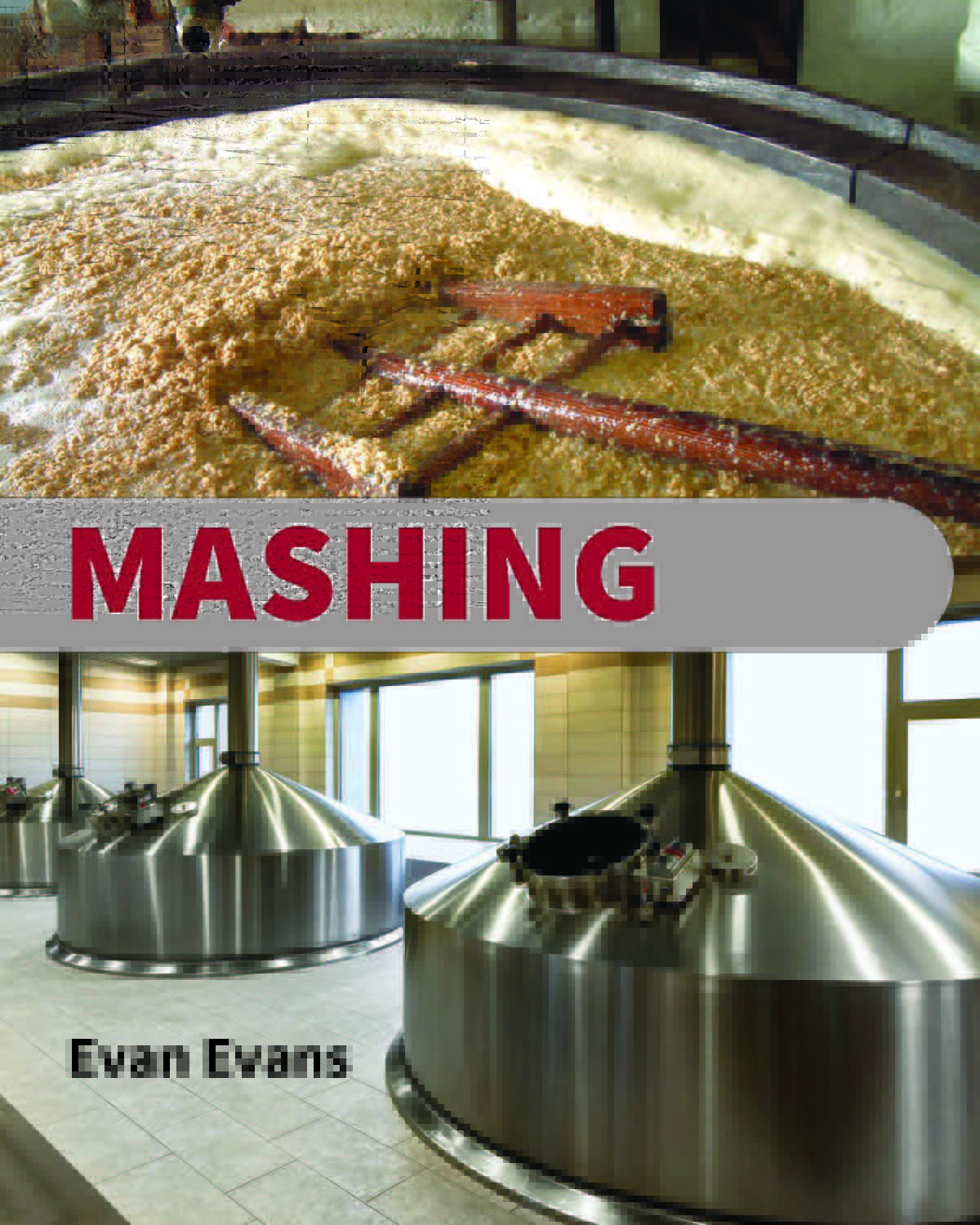
Mashing
By Evan Evans Readers will emerge from this book with a deeper understanding of the foundations of mashing biochemistry, such as the relationships between starch and starch-hydrolyzing enzymes and between proteins and proteases.
Provides a comprehensive foundation in the biochemistry of mashing, enabling brewers to confidently fine-tune the process with desirable results
Instructs brewers how to target key malt and mash parameters to troubleshoot quality and efficiency issues stemming from the mashing process
Includes practical examples of what happens when the mashing process is modified
With a career in malt quality research, Evan Evans has had many conversations with maltsters and brewers about the practical aspects of mashing. In Mashing, he provides an informed perspective on the mashing process, ranging from foundational knowledge to brewing applications.
Evans coined the phrase “from grass to glass” to summarize his perspective on malting quality. He approaches the topic from a malt chemist’s perspective, showing how the equipment interacts with malt quality so that brewers can fine-tune the process to consistently produce the style and brand of beer desired or make the necessary adjustments to produce a new beer.
Over the years, Evans has learned that most practical advances in malt quality and brewing result from subtle adjustments rather than quantum shifts. To this end, he strives to provide a holistic understanding of mashing by encompassing malt quality, equipment, and process control. He also includes practical examples of what happens when the mashing process is modified—from mash temperature and time to water-to-grist ratio and malt grinding.
Readers will emerge from this book with a deeper understanding of the foundations of mashing biochemistry, such as the relationships between starch and starch-hydrolyzing enzymes and between proteins and proteases. Readers will be able to knowledgeably integrate malt quality with brewhouse engineering to develop new beer brands and understand how to modify the mash to produce lite beers and low-alcohol beers. They also will be able to target key malt and mash parameters to troubleshoot quality and efficiency issues that stem from mashing, including fermentability, flavor stability, and filterability.
Malt: Practical Brewing Science
By Xiang S. Yin This book seamlessly bridges the science of malt with practical applications in food and beverage production.
The study of barley and malt is a specialized area, and limited sources of literature are dedicated to this topic. Malt, the first title in the new ASBC series Practical Brewing Science, provides a comprehensive overview of the underlying scientific and technical principles of malt and its substantial impact on beer quality—from the grain in the field to the beer on the table.
Drawing on more than 30 years of experience, Xiang S. Yin bridges the fundamentals of research on malt through a synthesis of previous and current literature. Readers will learn about the most recent advances in scientific research on malt and malting and the impact on brewing processes and yeast fermentation, as well as beer quality, flavor, and stability. Much of the information is from original research conducted in the author’s own industrial setting.
Yin uses simple terms to describe the fundamentals of biochemistry, microbiology, and sensory science and makes connections between the science and real-world applications. Two chapters detail the microbiological aspects of malt, and one chapter explores sprouted grains and their broader application in food and beverage production. Yin also discusses the engineering principles of malting and discusses how new technology will advance innovation and sustainability in the industry. These discussions are supplemented by 168 figures, 70 tables, and more than 420 reference citations.
Watch for other books in the ASBC series Practical Brewing Science, an initiative to provide readers with updated understanding and knowledge in various disciplines associated with the science of beer. In Malt and the forthcoming books in the series, the contents are presented mainly as concepts and principles, but original references are included where applicable.
Malt offers something for everyone, whether the reader is a student, a researcher, a maltster, a brewer, or simply a beer lover.
Quality Labs for Small Brewers: Building a Foundation for Great Beer
By Merritt Waldron This book will walk you step-by-step through the process of establishing and writing a quality program for your brewery.
Quality Labs for Small Brewers: Building a Foundation for Great Beer
Quality is both a system and a state of mind. Quality Labs for Small Brewers will walk you step-by-step through the process of establishing and writing a quality program for your brewery. Building an effective quality program will empower staff to directly influence the consistent production of safe, quality beer from grain to glass. Learn how policies, procedures, and specifications can help ensure quality throughout the process. Discover how to build a foundation and culture of quality within your brewery—no matter what the size—by establishing protocols, corrective actions, and improvements.
Brewers will see results through the application and implementation of prerequisite programs like Good Manufacturing Practices and food safety requirements. With these programs in place, dive beyond the numbers and build an understanding of a small brewer’s most important measurements and how to analyze them. These routines will help pinpoint any risks or areas of improvement and ensure that only quality beer reaches the customer, time after time.
Beer and Racism: How Beer Became White, Why it Matters, and the Movements to Change it
By Nathaniel G. Chapman and David L. Brunsma This unique book carves a much-needed critical and interdisciplinary path to examine and understand the racial dynamics in the craft beer industry and the popular consumption of beer.
Beer and Racism: How Beer Became White, Why it Matters, and the Movements to Change it
Beer in the United States has always been bound up with race, racism, and the construction of white institutions and identities.
Given the very quick rise of craft beer, as well as the myopic scholarly focus on economic and historical trends in the field, there is an urgent need to take stock of the intersectional inequalities that such realities gloss over.
This unique book carves a much-needed critical and interdisciplinary path to examine and understand the racial dynamics in the craft beer industry and the popular consumption of beer.
How to Make Hard Seltzer: Refreshing Recipes for Sparkling Libations
By Chris Colby Learn about the development of the current market and delve into the intricacies of sugars used in making seltzer.
How to Make Hard Seltzer: Refreshing Recipes for Sparkling Libations
Hard seltzer is a booming category in the world of lifestyle beverages and many craft brewers are lending their artisanal skills to this refreshing beverage. Simple to make and with a wide range of creative flavor additions, hard seltzer is a sparkling alternative for beer lovers looking to give their palate a different experience. Learn about the development of the current market and delve into the intricacies of sugars used in making seltzer. Understand the different regulations for this beverage based on how you make it so you can be in legal compliance.
Explore recipes, serving suggestions, and even mocktails for using hard seltzer. In this guide, some of the country' s best hard seltzer producers provide recipes and advice for making seltzer for both commercial and home enjoyment.
Sex, Smoke, and Spirits: The Role of Chemistry
Edited by Brian Guthrie, Jonathan D. Beauchamp, Andrea Buettner, Stephen Toth, and Michael C. Qian This book addresses emerging concerns about environmental smoke, the under-representation of the chemistry of attraction, and challenges in the analyses of alcoholic beverages.
Compiling recent advances in the chemistry of sex, smoke, and spirits, this work showcases applications of common methods of analysis and mechanistic learning to diverse subjects. This work addresses emerging concerns about environmental smoke, the under-representation of the chemistry of attraction, and challenges in the analyses of alcoholic beverages. Researchers practicing these methods and those active in the chemical origins of sensations, including analysis and mechanisms of formation, will find this book useful.
Historical Brewing Techniques: The Lost Art of Farmhouse Brewing
By Lars Marius Garshol This book describes brewing and fermentation techniques that are vastly different from modern craft brewing and preserves them for posterity and exploration.
Historical Brewing Techniques: The Lost Art of Farmhouse Brewing
Ancient brewing traditions and techniques have been passed generation to generation on farms throughout remote areas of northern Europe. With these traditions facing near extinction, author Lars Marius Garshol set out to explore and document the lost art of brewing using traditional local methods. Equal parts history, cultural anthropology, social science, and travelogue, this book describes brewing and fermentation techniques that are vastly different from modern craft brewing and preserves them for posterity and exploration.
Learn about uncovering an unusual strain of yeast, called kveik, which can ferment a batch to completion in just 36 hours. Discover how to make keptinis by baking the mash in the oven. Explore using juniper boughs for various stages of the brewing process. Test your own hand by brewing recipes gleaned from years of travel and research in the farmlands of northern Europe. Meet the brewers and delve into the ingredients that have kept these traditional methods alive. Discover the regional and stylistic differences between farmhouse brewers today and throughout history.
The Brewing Science Laboratory
By Sean E. Johnson and Michael D. Mosher Provides a great introduction to the importance of a brewery laboratory for brewing science students and novice brewers and a handy reference manual for experienced professionals.
Have you ever considered how your favorite beer always tastes the same, even though different bottles come from batches brewed months or even years apart? One of the most important characteristics of a good beer is consistency, and consistency is a key element in quality. Breweries achieve consistency through work done in the lab.
Laboratories serve a vital role in quality assurance (QA) and beer production. They check product quality, perform routine analyses on various stages of the production line, and eliminate health hazards. Labs also evaluate beer for consistency and trueness to specific requirements laid out by the brewery. Large breweries use their labs for research experiments to discover new technologies, methods, and ways to improve production. A lab with a proper quality program can prevent product recalls and even keep a brewery from going out of business.
In The Brewing Science Laboratory, authors Sean E. Johnson and Michael D. Mosher provide a solid foundation of scientific information plus the practical knowledge needed to create and operate a successful brewery laboratory. Utilizing an easy-to-understand format and a conversational tone, the authors introduce the fundamentals of chemistry, microbiology, and sensory. This approach is not only ideal for brewing science students and novice brewers, who may not be familiar with these topics, but also for more experienced readers, who will appreciate reviewing the basics.
Johnson and Mosher also explain the steps in implementing a QA program and present both the associated costs and the science behind the analysis. In addition, the authors address how to work within an established laboratory, how to perform proper laboratory techniques, and what instruments and equipment are needed to provide accurate and precise measurements. Readers will also learn about data management, laboratory safety, and laboratory capabilities. And throughout the discussion, the authors offer practical advice to brewers—for example, when to buy which instruments when following a tight budget.
The authors also introduce ASBC tools such as the Beer Flavor Wheel, the fishbone diagrams, and the ASBC Methods of Analysis to familiarize readers with the resources available to maintain quality, consistency, and safety. Chapter 15 contains streamlined versions of 30 ASBC methods that provide concise directions for preparing reagents, step-by-step instructions on conducting analyses, and reproducible worksheets on which to record data. Throughout the book, key terms are highlighted in the text and defined in the adjacent margin, and all the terms are compiled in a glossary.
The Brewing Science Laboratory was written for students interested in entering the brewing industry as quality control technicians. However, the information it provides will be valuable to small brewery owners and even more advanced brewers interested in increasing their laboratories’ output. As both a textbook and a reference manual, The Brewing Science Laboratory is an ideal resource for brewers of all experience levels.
QUALITY SYSTEMS: Practical Guides for Beer Quality
By Charles W. Bamforth In this accessible yet informative guide, Bamforth explains the processes behind the development of standard methods, how they are evaluated, and why they are important for accuracy and precision.
QUALITY SYSTEMS: Practical Guides for Beer Quality
Chocolatier Milton S. Hershey once said, “Give them quality. That’s the best kind of advertising.”
What is quality? According to Charles W. Bamforth, quality is a product that meets consumer expectations every time. He has covered specific aspects of achieving consistent quality in the previous four books in the ASBC series Practical Guides for Beer Quality. In the fifth installment, Quality Systems, he takes a more overarching view of the topic.
Standard procedures are not only crucial to quality, but they must also be clearly outlined and understood by everyone involved in the brewing process. To this end, quality systems—methods in which a manufacturer establishes and follows a system to ensure the product consistently meets applicable requirements and specifications—are necessary for successful brewing.
In this accessible yet informative guide, Bamforth explains the processes behind the development of standard methods, how they are evaluated, and why they are important for accuracy and precision. He also discusses the difference between quality control (reactive) and quality assurance (proactive) and introduces Hazard Analysis Critical Control Points (HACCP) and Hazard Analysis and Risk-Based Preventive Controls (HARPC). After arming the reader with the basics, Bamforth pulls it all together with practical advice for setting up a quality program. And woven throughout the narrative are colorful anecdotes and informed insights based on Bamforth’s more than 40 years in the brewing industry.
Like the other books in this series, Quality Systems is a necessary guide for anyone who works in the beer business—from commercial brewers and suppliers to wholesalers and retailers. Full of helpful figures and tables, the book is also a user-friendly resource for those who study beer scientifically and those who brew it and drink it recreationally!
Technology: Brewing and Malting, Sixth Edition
By Wolfgang Kunze and edited by Olaf Hendel This book contains didactically clear, graphic, and current descriptions of all essential malt and beer production aspects, from the raw materials to malt and beer production to filling and packaging.
echnology: Brewing and Malting – known as ‘the Kunze’ in brewing circles – has been accompanying countless brewers and maltsters while learning and practicing their trade ever since the first edition was published in 1961. Meanwhile, a total of more than 62,000 copies of this unique reference book have been published in seven languages, with around 34,000 copies in German, 17,000 in English, 6,000 in Chinese, 3,500 in Russian, and 1,500 in Spanish as well as translations into Polish, Serbian, and Hungarian.
The size alone speaks for itself, with around 1,000 pages with some 800 illustrations – many of them in color. Technology: Brewing and Malting has become a national and international standard work, thanks to its practical and comprehensive representation of all malt and beer production aspects.
The 6th English edition is an entirely new translation based on the revised 11th German edition from 2016. It contains didactically clear, graphic, and current descriptions of all essential malt and beer production aspects, from the raw materials to malt and beer production to filling and packaging.
The book addresses professional brewer in all sizes, from ambitious homebrewer, craft brewer, micro brewer, pub brewer up to industrial brewer. Because of its clear and thorough representation of all relevant aspects of malt and beer production, in almost 60 years, Technology: Brewing and Malting has become to what it is today: a standard work – across the globe.
Brewery Cleaning: Equipment, Procedures, and Troubleshooting
By Richard J. Rench This book provides theoretical and the practical information needed by brewing professionals to identify and correct cleaning issues throughout the brewery. Following the recommendations in this book will improve brewery operations in measurable ways.
Brewery Cleaning: Equipment, Procedures, and Troubleshooting
Most brewers are passionate about the products they produce, and they understand that achieving and maintaining high quality is critical to their ongoing success. Many strive to get the finest raw materials, to understand their equipment and its limitations, and to continually hone their craft.
However, even many formally trained brewers may not have a good understanding of the cleaning products they use or how to apply them in the most effective manner. Likewise, brewery production staff may not know how to identify potential cleaning issues or understand how cleaning products, procedures, and systems work. These topics are not well covered in many college brewing courses and textbooks.
Brewery Cleaning: Equipment, Procedures, and Troubleshooting provides both the theoretical and the practical information needed by brewing professionals to identify and correct cleaning issues in all parts of the brewery. The book covers a range of topics that will improve brewery operations in measurable ways:
Key components of cleaning products and how they work: Understanding cleaning products will lead to making better selections, resulting not only in improved microbiological performance but also in reduced cleaning time and costs.
Brewery cleaning procedures: Knowing fundamental procedures will enable examining and improving existing procedures for efficiency and effectiveness.
Brewery cleaning systems: Understanding the equipment and principles associated with typical cleaning systems will allow determining whether current systems are designed and working correctly, as well as improve microbiological performance and reduce cleaning time and costs.
Optimizing, auditing, and troubleshooting cleaning systems: Recognizing common issues and knowing how to troubleshoot them will increase productivity and lower costs.
Developments in cleaning technologies: Considering technologies such as acid cleaning and sanitizers will provide options for reducing cleaning time and utility costs.
Safe handling, storage, and disposal of chemicals: Following best practices will lower the risk of injuries, help compliance with local regulations, and avoid the costs that can be related to both.
The author, Richard J. Rench, is an experienced and well-qualified brewer. In addition, he has spent many years working with a chemical cleaning product supplier to resolve cleaning issues in a variety of breweries and to provide solutions that help reduce costs while improving microbiological performance.
Brewery Cleaning will be an indispensable resource for brewery production professionals, including brewmasters, brewers, and lead hands, as well as brewery engineers and quality control managers and staff. Quality control and assurance managers in the dairy industry will also find this book valuable in addressing cleaning issues. For brewing instructors and their students, this book will provide the text they have needed for some time.
COLOR AND CLARITY: Practical Guides for Beer Quality ePUB File
By Charles W. Bamforth Many factors affect color and clarity, and understanding them is key to producing beer that has the desired appearance every time.
COLOR AND CLARITY: Practical Guides for Beer Quality ePUB File
What do beer drinkers look for in the clarity of their brew? If brightness is best, as traditionalists will argue, then what explains the current popularity of profoundly turbid beer? And what about color? In one experiment, individuals described the flavor of beer based on its color. Color matters—but how and why?
Many factors affect color and clarity, and understanding them is key to producing beer that has the desired appearance every time. Color and Clarity, the fourth installment in the ASBC series Practical Guides for Beer Quality, is the first comprehensive yet easy-to-read book to describe all of those factors.
Author Charles W. Bamforth, who has been part of the brewing industry for more than 40 years, presents the science behind beer in a clear, fun manner. In his signature chatty, informal style, Bamforth takes readers through the complex nature of color and turbidity. He explains how raw materials, processing, and packaging can impact color and clarity, enabling readers to think systematically and knowledgeably about ways to achieve the qualities they desire in their beer. He also offers straightforward guidelines on how to measure and interpret color and clarity, helping readers improve quality performance. Finally, he provides a wealth of useful references and links, directing readers to informative sources about methods and equipment. And of course, woven throughout the book are the author’s insightful and authoritative anecdotes.
Like the other books in this series, Color and Clarity is a necessary guide for anyone who works in the beer business—from commercial brewers and suppliers to wholesalers and retailers. The book is also a user-friendly resource for those who study beer scientifically and those who brew it and drink it recreationally!
Gose: Brewing A Classic German Beer for the Modern Era
By Fal Allen Gose explores the history of this lightly sour wheat beer style, its traditional ingredients and special brewing techniques.
Gose: Brewing A Classic German Beer for the Modern Era
Explore the sensation of tart, fruity and refreshing Gose-style beers, popular in Germany centuries ago and experiencing a renaissance today. Follow the development of this lightly sour wheat beer as it grew, then bordered on extinction, before surging into popularity due to the enthusiasm and experimentation of American craft brewers.
Gose explores the history of this lightly sour wheat beer style, its traditional ingredients and special brewing techniques. Discover brewing methods from the Middle Ages and learn how to translate them to modern day beer. Learn about salinity, spices, and lactic acid as you experiment with Gose recipes from some of the best-known craft brewers of our time. This refreshing journey captures the innovation and experimentation that is occurring within the style and help you brew your own Gose-style beers.
COLOR AND CLARITY: Practical Guides for Beer Quality
By Charles W. Bamforth Many factors affect color and clarity, and understanding them is key to producing beer that has the desired appearance every time.
COLOR AND CLARITY: Practical Guides for Beer Quality
What do beer drinkers look for in the clarity of their brew? If brightness is best, as traditionalists will argue, then what explains the current popularity of profoundly turbid beer? And what about color? In one experiment, individuals described the flavor of beer based on its color. Color matters—but how and why?
Many factors affect color and clarity, and understanding them is key to producing beer that has the desired appearance every time. Color and Clarity, the fourth installment in the ASBC series Practical Guides for Beer Quality, is the first comprehensive yet easy-to-read book to describe all of those factors.
Author Charles W. Bamforth, who has been part of the brewing industry for more than 40 years, presents the science behind beer in a clear, fun manner. In his signature chatty, informal style, Bamforth takes readers through the complex nature of color and turbidity. He explains how raw materials, processing, and packaging can impact color and clarity, enabling readers to think systematically and knowledgeably about ways to achieve the qualities they desire in their beer. He also offers straightforward guidelines on how to measure and interpret color and clarity, helping readers improve quality performance. Finally, he provides a wealth of useful references and links, directing readers to informative sources about methods and equipment. And of course, woven throughout the book are the author’s insightful and authoritative anecdotes.
Like the other books in this series, Color and Clarity is a necessary guide for anyone who works in the beer business—from commercial brewers and suppliers to wholesalers and retailers. The book is also a user-friendly resource for those who study beer scientifically and those who brew it and drink it recreationally!
Compendium of Rice Diseases and Pests, Second Edition
Edited by Richard D. Cartwright, Donald E. Groth, Yeshi A. Wamishe, Christopher A. Greer, Lee A. Calvert, Casiana M. Vera Cruz, Valérie Verdier, and M. O. Way This easy-to-use book offers images and the latest practical information for diagnosis of diseases and pests.
Compendium of Rice Diseases and Pests, Second Edition
Rice is among the most significant food crops on the planet, covering an area of more than 154 million hectares, according to the International Rice Research Institute. And while consumption of rice increases each year, the spread and increased incidence of various rice diseases, disorders, and pests pose greater risks to production. Better, more up-to-date management practices are needed to keep feeding the world.
The Compendium of Rice Diseases and Pests, Second Edition, was developed to help agricultural professionals and academics get the latest information on the management of diseases, insect pests, and abiotic disorders of this important crop.
Published more than 25 years after the first edition, this new full-color update presents the major shifts in rice cultivation, including the more extensive use of hybrid rice, herbicide resistance, new biotechnologies and fungicides, the continued shrinkage of genetic diversity, and more intense cultural management systems.
To help foster worldwide communication and information exchange on rice and its many production challenges, a group of top rice experts from various areas of the world were tapped as editors. along with a team of contributing authors specializing in key areas of rice health. Together they updated much of the information in the first edition, as well as added important newly discovered diseases and pests, ultimately providing better and fresher insights into the diseases, disorders, and pests that affect the world’s most predominant human food crop.
Each section of the book is well illustrated to help users effectively identify the disease, pest, or disorder at hand. In total, the book contains 167 maps, diagrams, and photos—most of them to this edition.
The Compendium of Rice Diseases and Pests, Second Edition, is broken into five major sections, including…
An overview of rice production and consumption, taxonomy, plant development, and diseases and arthropod pests.
A section on biotic diseases, representing 70 rice diseases categorized by pathogen type: bacteria, fungi and oomycetes, viruses, phytoplasmas, viruslike agents, and nematodes. For each disease, information on symptoms, causal organisms, disease cycle and epidemiology, and management strategies are included. A list of references provides additional resources on the disease.
A section on abiotic disorders, covering a range of nutritional disorders and herbicide injuries, as well as akiochi (hydrogen sulfide toxicity), akegare, and straighthead.
A section on arthropod pests, including the rice water weevil, rice stink bug, rice stalk borer, and others. For each arthropod pest, descriptive information, symptoms of damage, and suggested management strategies are provided.
An appendix that lists the common names of rice diseases (along with their pathogens), as well as a glossary and index.
The Compendium of Rice Diseases and Pests, Second Edition, is a useful tool for academics and professionals involved with rice crops, including researchers, diagnosticians, extension personnel, crop consultants, farm managers, and growers. It is a valuable tool for the field, lab, or classroom.
The Business of Sustainable Wine: How to Build Brand Equity in a 21st Century Wine Industry
By Sandra Taylor This book offers a new view of how the industry can be an important actor in sustainable agriculture and provides a unique insight for the consumer on what to look for on supermarket shelves.
The Business of Sustainable Wine: How to Build Brand Equity in a 21st Century Wine Industry
Modern agriculture is the largest single contributor to global greenhouse gas production, deforestation, and water consumption. Biodiversity, climate change, energy, soil degradation, and water scarcity are critical issues. Consumers are increasingly and justifiably concerned about where their food and beverages come from and whether they are produced in a responsible way, often without an understanding of how to determine the provenance of the products they consume. Wine is no exception.
In The Business of Sustainable Wine, internationally recognized expert in environmental sustainability, Sandra Taylor, offers a new view of how the industry can be an important actor in sustainable agriculture and provides a unique insight for the consumer on what to look for on supermarket shelves. The Business of Sustainable Wine analyzes sustainability trends in wine regions around the world. Drawing on case studies from a multitude of commodity industries, Taylor gives producers the tools to integrate sustainability into their winegrowing and marketing, and retailers’ procurement managers will learn how to assess sustainable attributes of wines on offer. Like fair trade cocoa and shade grown coffee, wine must, sooner or later, meet the powerful demands of social activists and a growing consumer contingent for ethical and organic products.
The Alcohol Textbook, Sixth Edition
Edited by G.M. Walker, C. Abbas, W.M. Ingledew, and C. Pilgrim There is no better tool for understanding the ethanol industry as The Alcohol Textbook.
The Alcohol Textbook is described as “the definitive reference book” on the distilled spirits and fuel alcohol industries. The new sixth edition provides an overview of the current state of these industries, as well as details about sources and processing of sugars and grains, mashing and fermentation, management of contaminants, alcohol recovery technology, production co-products, and more. The book concludes by presenting future perspectives for alcohol production, including value-added products, new technologies, and technical opportunities and challenges.
Lead editor Graeme Walker is scientific director of The Ethanol Technology Institute and conducts both The Alcohol School and The Biofuels Academy.
Methods of Modern Homebrewing
By Chris Colby Methods of Modern Homebrewing gives step-by-step instructions, with helpful photos, for very major homebrewing methods.
Hey homebrewers - make better beer! Returning for his second book, Chris Colby highlights the modern brewing methods homebrewers use to make beer. From the basic procedures for making beer from malt extract to advanced all-grain techniques and tests for quality... This book is a beer geek's dream! There is no book like this on the market and a brewer would have to pore through numerous brewing texts, magazine articles and website posts to find all this information.
Methods of Modern Homebrewing gives step-by-step instructions, with helpful photos, for very major homebrewing method. The book also features useful charts for brewers to get information at a glance. Appropriate example recipes are given for most of the techniques. Learn to brew with malt extract, by partial mashing or go all-grain. Then move on to master decoction mashing, krausening, high gravity brewing and more. This book will feature 50 recipes and 60 photographs.
FRESHNESS: Practical Guides for Beer Quality
By Charles W. Bamforth A reader-friendly guide that helps users identify and fix root causes of flavor stability issues, maximize stability performance, extend the shelf life of their beers.
Beer consumers these days are much less forgiving with flavor inconsistencies. Their increasingly sophisticated tastes and heightened expectations are constantly challenging breweries to raise the bar on beer quality.
Flavor instability is currently one of the most critical quality issues faced by the brewing industry, and this third book in veteran author Charlie Bamforth’s Practical Guides for Beer Quality Series, is a solution unto itself for ensuring the flavor stability of beer.
In an informal and reader-friendly way, this book guides the reader through the complex nature of beer flavor stability, covering the many factors and issues associated with keeping your beer tasting fresh and consistent. It features…
Specific advice related to stability, such as staling and skunking
The factors that impact stability, such as raw materials, process, and packaging
Explanations behind the smells and tastes of beer that change over time and how to predict the rate at which these changes will occur
How to minimize flavor stability issues at the outset
Step-by-step explanations for interpreting and fixing flavor stability problems
References and links to help readers source methods and equipment that will maximize the shelf life of their beers
The book is ideal for commercial brewers, suppliers to the brewing industry, scientists studying beer aging, home-brewers, beer wholesalers and retailers, and serious lovers of beer.
Dr. Bamforth has been a thought leader in the brewing industry for almost 40 years. As one of the early researchers of flavor stability, he was involved in much of the original research upon which the book draws.
Brewing Materials and Processes: A Practical Approach to Beer Excellence
Edited by Charles W. Bamforth This book presents a novel methodology on what goes into beer and the results of the process.
Brewing Materials and Processes: A Practical Approach to Beer Excellence
Brewing Materials and Processes: A Practical Approach to Beer Excellence presents a novel methodology on what goes into beer and the results of the process. From adjuncts to yeast, and from foam to chemometrics, this unique approach puts quality at its foundation, revealing how the right combination builds to a great beer. Based on years of both academic and industrial research and application, the book includes contributions from around the world with a shared focus on quality assurance and control.
Each chapter addresses the measurement tools and approaches available, along with the nature and significance of the specifications applied. In its entirety, the book represents a comprehensive description on how to address quality performance in brewing operations.
Understanding how the grain, hops, water, gases, worts, and other contributing elements establish the framework for quality is the core of ultimate quality achievement. The book is ideal for users in corporate R&D, researchers, students, highly-skilled small-scale brewers, and those seeking an understanding on how the parts impact the whole in beer production, providing them with an ideal companion to complement Beer: A Quality Perspective.
American Sour Beers: Innovative Techniques for Mixed Fermentations
By Michael Tonsmeire This book details the wide array of processes and ingredients in American sour beer production with actionable advice each step of the way.
American Sour Beers: Innovative Techniques for Mixed Fermentations
One of the most exciting and dynamic segments of today’s brewing scene is American-brewed sour beers, with craft brewers and homebrewers alike adapting traditional European techniques to create some of the world’s most distinctive and experimental styles. This book details the wide array of processes and ingredients in American sour beer production, with actionable advice each step of the way. Inspiration and practical applications for brewers of all levels are provided by some of the country’s best known sour beer brewers, including Russian River, Jolly Pumpkin and The Lost Abbey.
Barley Chemistry and Technology, Second Editon
Edited by Peter R. Shewry and Steven E. Ullrich This book is a source of information for scientists, students and others who need to understand the development, structure, composition, or end use properties of barley grains related to their cultivation, trade, and utilization.
Barley: Chemistry and Technology, Second Edition is an important tool for any cereal chemist, food scientist, or crop scientist who needs to understand the development, structure, composition, or end use properties of the barley grain for cultivation, trade, and utilization.
Editors Peter R. Shewry and Steven E. Ullrich bring together a wide range of international authorities on barley to create this truly unique, encyclopedic reference work that covers the massive increase in barley knowledge over the past 20 years, when the first edition of this book was published.
Barley: Chemistry and Technology, Second Edition offers the latest coverage of barley’s applications in milling, breeding, and production for food, feed, malting, brewing, distilling, and biofuels.
It delivers a complete update of the latest knowledge of barley’s many components, from the genetic and molecular level to its many constituents, such as proteins, carbohydrates, arabinoxylans, minerals, lipids, terpenoids, phenolics, and vitamins.
This important book also includes chapters on barley’s plant and grain development from both the physiological and genetic perspectives, making it an important resource not only for cereal and food scientists, but crop scientists involved in breeding, agronomy, and related plant sciences.
Coverage includes…
Updated, comprehensive knowledge on barley’s components, including proteins, carbohydrates, arabinoxylans, and bioactive effects.
New end-use ideas for barley as an ingredient in food products
Non-food industrial applications for barley, including biofuels
A new chapter on barley’s health benefits
Molecular breeding for malting quality
Individuals and institutions who have collected other books in the popular Monograph series will find Barley: Chemistry and Technology, Second Edition a worthy addition. Those new to the series will get a comprehensive introduction to the most trusted series of books on grains in existence.
Beer Packaging, Second Edition
Edited by Ray Klimovitz and Karl Ockert Beer Packaging offers complete coverage of the packaging process from containers through handling and quality controls. It shares experiences from expert contributors to give you knowledge for real-life situations.
Packaging is the most expensive aspect of brewing, representing up to two thirds of the cost of beer production. It is also one of the least forgiving steps in the brewing process.
A perfect batch of beer can be ruined in nanoseconds by microorganisms on your nozzles or too much oxygen making its way into your bottles or cans. Foreign objects, like glass, can get into your product…and to your consumers. Too little glue on your boxes can send your product (and profit) crashing to the ground.
Brewers have a lot invested in their packaging process, and nothing less than reputations and profitability are at stake. An up-to-date, comprehensive book on the topic has been long overdue. And with all the changes and innovations in packaging that have taken place in the past 20 years, no such book has been written…until now.
Enter Beer Packaging, Second Edition, the first comprehensive book on the beer packaging process since the early 1980s. This thorough, one-of-a-kind guide and reference represents the many new innovations and best practices developed since MBAA published the best-selling first edition. It is a must-have resource for all of today’s brewers up and down the production line, and includes perspectives for both the small craft brewers and those managing small scale pilot runs for large breweries averaging more than 10 million barrels per year.
Beer Packaging, Second Edition guides users around the many potential pitfalls of packaging, particularly those that can affect your current or future customers, and ultimately your profit margins.It covers the beer packaging process from the tank to containers, to filling and boxing, and everything in between, including…
Packaging Line Design, Control, and Instrumentation
Environmental Management of Brewery Operations
Packaging Line Project Management
Basic Principles and Operation of a Bottle Washer
Small-Scale Canning Lines
Flash and Tunnel Pasteurization
Bottle Filling and Crowning
Cans and Seaming
Container and Product Movement
Keg Line Operations
Brewery Case Palletizing
This book is formatted in a way that is easy to understand. Each facet of packaging is broken down so that any person in the brewery can become familiar with each step in the process. In addition, case history experiences from expert contributors give the reader knowledge for real-life situations, while technical features by industry experts cover both the fundamentals and details for each subject.
Beer Packaging, Second Edition is an excellent “go-to” manual for those working in beer packaging. It is a highly useful reference for beer packaging professionals already on the job and for those planning to build or expand their operations.
The book is also ideal for brewers and brewing managers, brewery engineers, materials and equipment suppliers, as well as brewing program instructors and their students.
Those who own and use books from MBAA’s Practical Brewer Handbook series will also find this book useful.
Dinner in the Beer Garden
By Lucy Saunders It's a cookbook for people who enjoy carrots and kale, but also love beer, cheese and chocolate.
Lucy Saunders is the author of four cookbooks about beer, and has been writing about beer and food for magazines and newspapers for more than 20 years.
DINNER IN THE BEER GARDEN is the theme of her cookbook – but this isn’t a cookbook about typical bratwurst or roasted pork. All the recipes feature fresh fruits and vegetables at the center of the plate, and a few call for fish and seafood.
It’s a cookbook for people who enjoy carrots and kale, but also love beer, cheese and chocolate. Profiles of beer gardens and tips on pairing beer with fruits and vegetables appear in between chapters, with lots of stories and tips on pairing.
Recipes are contributed by chefs such as AJ Hurst from Vintage Brewing Co. who made the Beet--Ricotta Gnocchi with a Weiss Blau Sauce, and chefs from the Kohler Festival of Beer, as well as home cooks like Lucy.
Easy recipes include the Grilled Vegetables with the New Glarus Beer and salads. The Burnt Caramel Cream and Chocolate Shortcakes with Sprecher Black Bavarian are simple to make, but taste impressive.
"My goal in writing the cookbook is to focus on pairing beer with fresh--grown food," says Saunders. "People are growing vegetables at home, buying fresh produce at farmers markets, participating in community supported agriculture, enjoying Meatless Mondays, so it’s good to show what can be done with beer pairings.
Saunders also wrote the profiles in the cookbook to highlight sustainable brewing such as Bell’s Brewery starting to grow its own barley and Rogue Ales Grow Your Own initiative in preserving farm land for hops and barley.
Brewing Intensification
By Graham G. Stewart Improve volume, reduce costs, and improve time to market through intensification of the brewing process, including brewing operations, wort composition, yeast, fermentation, and maturation.
Learn to Apply the Concepts of Lean Manufacturing to Brewing and Distilling
Like many in manufacturing-based industries, economic pressures are forcing craft brewers to produce beer with leaner, more efficient, and cost-effective techniques. These techniques have helped breweries increase their raw material production efficiency, increase beer volume per unit time, and reduce brewing time. This form of leaner manufacturing is called “brewing intensification.”
Brewing Intensification is the latest book written by renowned brewing scientist Graham G. Stewart, and it ultimately can help brewers achieve leaner manufacturing and, in turn, save on production costs.
The book discusses the concept of lean manufacturing as it is applied to brewing and distilling. It also covers intensification of all aspects of the brewing process. Coverage includes the intensification of:
Brewing operations
Wort composition
Yeast
Fermentation
Maturation
Because intensification brings significant change to the brewing process, the book’s final chapter outlines training guidelines to help brewers and operators implement and keep up with intensification trends in both brewing and distilling.
Brewing Intensification is a must-read for any brewery looking to save on costs and while improving volume in their brewing processes. It should also be on the assigned reading list of any student in the brewing industry, from the novice, casual distance learner to master brewer candidates and everyone in between.
BEER SAFETY AND WHOLESOMENESS, QUALITY SYSTEMS, COLOR AND CLARITY, FRESHNESS, FLAVOR, and FOAM: Practical Guides for Beer Quality
By Charles W. Bamforth Six volumes of Dr. Charlie Bamforth's acclaimed "Practical Guides for Beer Quality" series, BEER SAFETY AND WHOLESOMENESS, QUALITY SYSTEMS, COLOR AND CLARITY, FRESHNESS, FLAVOR and FOAM
BEER SAFETY AND WHOLESOMENESS, QUALITY SYSTEMS, COLOR AND CLARITY, FRESHNESS, FLAVOR, and FOAM: Practical Guides for Beer Quality
BEER SAFETY AND WHOLESOMENESS is the sixth and final book in the “Practical Guides for Beer Quality” series.
People have consumed beer for more than 8,000 years—and for many, beer has served as a food as much as a drink. Beer found its place on the dining table because it was realized to be safer than water and to provide nutrients. Certainly, beer has more nutritional value than any other alcoholic beverage and is better suited to a balanced diet.
In the sixth and final installment in the ASBC series Practical Guides for Beer Quality, Charles W. Bamforth offers a comprehensive and authoritative description of the factors that underlie beer safety and wholesomeness. He highlights the food safety issues associated with producing beer, the current understanding of beer consumption, the basis for making health claims about beer consumption, and the potential negative and positive health effects of drinking beer.
Bamforth also identifies how brewers can ensure that their products are as safe and wholesome as possible by guiding them through risk factors and recommending preventive and corrective measures. He helps brewers understand how to avoid chemical and microbiological contamination and describes the relationship between raw materials and related processes and the levels of beneficial and adverse components in beer.
With more than 40 years in the brewing industry, Bamforth is skilled at presenting complex scientific issues in a readily understood and applicable manner. He takes a straightforward approach to discussing science and focuses on the practicalities of health and wholesomeness as they relate to brewing. Beer Safety and Wholesomeness will be a valuable resource not only to professionals in the brewing industry but also to people who love their beer!
QUALITY SYSTEMS QUALITY SYSTEMS is the fifth book in the “Practical Guides for Beer Quality” series.
Chocolatier Milton S. Hershey once said, “Give them quality. That’s the best kind of advertising.”
What is quality? According to Charles W. Bamforth, quality is a product that meets consumer expectations every time. He has covered specific aspects of achieving consistent quality in the previous four books in the ASBC series Practical Guides for Beer Quality. In the fifth installment, Quality Systems, he takes a more overarching view of the topic.
Standard procedures are not only crucial to quality, but they must also be clearly outlined and understood by everyone involved in the brewing process. To this end, quality systems—methods in which a manufacturer establishes and follows a system to ensure the product consistently meets applicable requirements and specifications—are necessary for successful brewing.
In this accessible yet informative guide, Bamforth explains the processes behind the development of standard methods, how they are evaluated, and why they are important for accuracy and precision. He also discusses the difference between quality control (reactive) and quality assurance (proactive) and introduces Hazard Analysis Critical Control Points (HACCP) and Hazard Analysis and Risk-Based Preventive Controls (HARPC). After arming the reader with the basics, Bamforth pulls it all together with practical advice for setting up a quality program. And woven throughout the narrative are colorful anecdotes and informed insights based on Bamforth’s more than 40 years in the brewing industry.
Like the other books in this series, Quality Systems is a necessary guide for anyone who works in the beer business—from commercial brewers and suppliers to wholesalers and retailers. Full of helpful figures and tables, the book is also a user-friendly resource for those who study beer scientifically and those who brew it and drink it recreationally!
COLOR AND CLARITY COLOR AND CLARITY is the fourth book in the “Practical Guides for Beer Quality” series.
What do beer drinkers look for in the clarity of their brew? If brightness is best, as traditionalists will argue, then what explains the current popularity of profoundly turbid beer? And what about color? In one experiment, individuals described the flavor of beer based on its color. Color matters—but how and why?
Many factors affect color and clarity, and understanding them is key to producing beer that has the desired appearance every time. Color and Clarity, the fourth installment in the ASBC series Practical Guides for Beer Quality, is the first comprehensive yet easy-to-read book to describe all of those factors.
Author Charles W. Bamforth, who has been part of the brewing industry for more than 40 years, presents the science behind beer in a clear, fun manner. In his signature chatty, informal style, Bamforth takes readers through the complex nature of color and turbidity. He explains how raw materials, processing, and packaging can impact color and clarity, enabling readers to think systematically and knowledgeably about ways to achieve the qualities they desire in their beer. He also offers straightforward guidelines on how to measure and interpret color and clarity, helping readers improve quality performance. Finally, he provides a wealth of useful references and links, directing readers to informative sources about methods and equipment. And of course, woven throughout the book are the author’s insightful and authoritative anecdotes.
Like the other books in this series, Color and Clarity is a necessary guide for anyone who works in the beer business—from commercial brewers and suppliers to wholesalers and retailers. The book is also a user-friendly resource for those who study beer scientifically and those who brew it and drink it recreationally!
FRESHNESS FRESHNESS is the third book in the “Practical Guides for Beer Quality” series. Beer consumers these days are much less forgiving with flavor inconsistencies. Their increasingly sophisticated tastes and heightened expectations are constantly challenging breweries to raise the bar on beer quality.
Flavor instability is currently one of the most critical quality issues faced by the brewing industry, and this third book in veteran author Charlie Bamforth’s Practical Guides for Beer Quality Series, is a solution unto itself for ensuring the flavor stability of beer.
In an informal and reader-friendly way, this book guides the reader through the complex nature of beer flavor stability, covering the many factors and issues associated with keeping your beer tasting fresh and consistent. It features…
Specific advice related to stability, such as staling and skunking
The factors that impact stability, such as raw materials, process, and packaging
Explanations behind the smells and tastes of beer that change over time and how to predict the rate at which these changes will occur
How to minimize flavor stability issues at the outset
Step-by-step explanations for interpreting and fixing flavor stability problems
References and links to help readers source methods and equipment that will maximize the shelf life of their beers
The book is ideal for commercial brewers, suppliers to the brewing industry, scientists studying beer aging, home-brewers, beer wholesalers and retailers, and serious lovers of beer.
Dr. Bamforth has been a thought leader in the brewing industry for almost 40 years. As one of the early researchers of flavor stability, he was involved in much of the original research upon which the book draws.
FLAVOR FLAVOR is the second book in the “Practical Guides for Beer Quality” series. FLAVOR offers an easy-to-read yet comprehensive and authoritative description on the science of flavor in brewing. It also addresses how factors such as raw materials and the process impact the flavor and aroma of beer.
Through this book, the reader can systematically get to the root cause of flavor problems they are encountering and address quality issues through:
Brewing science knowledge without the technical complexities
Practical advice pertaining to brewing for flavor characteristics
Quality assurance and control parameters for flavors
Troubleshooting guides to flavor issues
References and links provided in the book will also allow the reader to source methods and equipment that they can use in pursuit of flavor excellence.
FLAVOR will be of interest to brewers; suppliers to the brewing industry; sensory scientists; home brewers; beer servers in bars, restaurants, and hotels; and any serious lover of beer. It will enhance courses in malting and brewing science and any class where flavor is covered.
FOAM This book, the first in a series entitled “Practical Guides for Beer Quality,” offers an easy-to-read yet comprehensive and authoritative description of all the factors that impact the quality and quantity of foam on beer.
FOAM guides the reader through the many factors that impact foam, culminating in a step-by-step explanation of how problems with too much or too little foam can be interpreted and rectified. The book takes the reader through the role that foam plays in perceived quality, the factors that impact foam, and the contributions that all stages from barley to dispense make to foam. It also describes how to measure head stability and cling and diagnose problems with over foaming (gushing). The author has conducted detailed research studies on foam for more than 30 years and indeed has been referred to as the “Pope of Foam.”
The book might be justly called a “foam owner’s manual” and will be of interest to brewers; suppliers to the brewing industry; scientists studying foam; home brewers; beer servers in bars, restaurants, and hotels; and any serious lover of beer. It will enhance courses in malting and brewing science and any class where foaming and bubbles are covered.
Beer Steward Handbook, Second Edition
Edited by Stephen R. Holle, Ray Klimovitz, Lars Larson, Karl Ockert, and Steve Presley This book includes an overview of the brewing process, a description of a multitude of beer styles worldwide, the rules for pairing food and beer, and the ingredients behind brewing.
As a beer devotee, you need to know which beers are malty or hoppy and the difference between an English IPA and an American IPA. You may even want to know which beer goes with which glass, or with which dinner course. The Beer Steward Handbook–A Practical Guide to Understanding Beer is an excellent and well-written guide to learning the basics surrounding beer. It includes an overview of the brewing process, a description of a multitude of beer styles worldwide, the rules for pairing food and beer, and the ingredients behind brewing. It discusses how to best maintain freshness of beer and the ideal ways to serve beer, right down to glass shape, size, and angle of the pour.
The Beer Steward Handbook provides an excellent background to help you explain the entire brewing process to others, the importance of proper serving techniques, the large variety found among beer styles, and much more. It even describes the important health benefits of beer through a science-based, but understandable approach.
This book is perfect for wholesalers, retail managers, restaurateurs, bar managers, servers, retail sales staff, duty managers, and beer enthusiasts at all levels.
Yeast Flocculation, Vitality, and Viability
Edited by Alex Speers Proceedings of the 2nd International Brewers Symposium
This book is a comprehensive resource on yeast vitality and viability, flocculation, malt influences on yeast performance, and the use of dried yeast in the brewing process. Editor Alex Speers brings together more than 20 leading international brewing scientists to give an update on the latest theoretical and applied findings regarding brewing yeast behavior. The book reflects updates to the conference presentations of the same name and is certain to serve as an important reference for those responsible for brewing yeast behavior and its role when creating and producing high-quality, well-crafted beers. It gives brewers and brewing scientists an essential perspective on the functionality of this important brewing component.
Yeast: The Practical Guide to Beer Fermentation
By Chris White and Jamil Zainasheff A resource for brewers of all experience levels.
Yeast: The Practical Guide to Beer Fermentationis a resource for brewers of all experience levels. The authors adeptly cover yeast selection, storage and handling of yeast cultures, how to culture yeast and the art of rinsing/washing yeast cultures. Sections on how to set up a yeast lab, the basics of fermentation science and how it affects your beer, plus step by step procedures, equipment lists and a guide to troubleshooting are included.
The Science of Gluten-Free Foods and Beverages
Edited by Elke K. Arendt and Fabio Dal Bello This book covers the work presented at the First International Conference on Gluten-Free Cereal Products and Beverages.
In genetically susceptible individuals the ingestion of gluten and related proteins triggers an immune-mediated enteropathy known as Celiac Disease (CD). Recent epidemiological studies have shown that 1 in 100 people worldwide suffer from CD. Such a rate establishes CD as one of the most common food intolerances. Celiac patients eating wheat or related proteins such as hordeins (barley) or secalins (rye) undergo an immunological response, localized in the small intestine, which destroys mature absorptive epithelial cells on the surface of the small intestine. Currently, the only way that CD can be treated is the total lifelong avoidance of gluten ingestion. Therefore, people that suffer from CD have to follow a very strict diet and avoid any products which contain wheat, rye or barley. Avoidance of these cereals leads to a recovery from the disease and significant improvement of the intestinal mucosa and its absorptive functions. Celiac patients are not in position to eat some of the most common foods such as bread, pizzas, biscuits or drink beer and whiskey. Due to the unique properties of gluten, it is a big challenge for food scientists to produce good quality gluten free products.
The Science of Gluten-Free Foods and Beverages covers the work presented at the First International Conference on Gluten-Free Cereal Products and Beverages. The area of gluten-free foods and beverages is becoming more and more important, since the number of people suffering from Celiac Disease as well as people suffering from gluten allergies is rising. In the United Kingdom, 10% of the population claims to be suffering from food allergies. This book will be extensively referenced. It is meant to give an overview of the work being carried out in the area of gluten-free science.
Compendium of Hop Diseases and Pests
Edited by Walter Mahaffee, Sarah Pethybridge, and David H. Gent A comprehensive and authoritative account of diseases and pests of hop as well as numerous other disorders and injuries that impact this valuable specialty crop.
Compendium of Hop Diseases and Pests is a comprehensive and authoritative account of diseases and pests of hops as well as numerous other disorders and injuries that impact this valuable specialty crop. This compendium is a practical reference for anyone interested in healthy, high-quality hops, which in addition to brewing, is showing promise for use in sugar processing and as a preservative in ethanol production and for its potential use as an antimicrobial additive in animal feed.
More than 140 color images are presented with expert scientifically peer-reviewed descriptions of the identifying characteristics of disease and pest symptoms and their causal agents. This book also provides an overview of the taxonomy and botanical traits of the genus Humulus. It provides insight into cone uses and chemistry, methods for hop production, and an extensive list of hop cultivars and their characteristics. The description of each disease or pest includes a general account of its importance and world distribution, symptoms, causal organism or agent, disease cycle and epidemiology, management, and selected references. The references document the descriptions and provide resources for additional information.
Compendium of Hop Diseases and Pests assists in the diagnosis of hop diseases and pests in the field, laboratory, or diagnostic clinic and provides recommendations for management of hop diseases and pests. This compendium will be useful to plant pathologists, entomologists, nematologists, crop production specialists, growers, diagnostic clinicians, students, regulatory agents, crop consultants, agribusiness representatives, educators, researchers, and others interested in the recognition or management of hop diseases and pests throughout the world.
Benefits of Compendium of Hop Diseases and Pests:
Visually identify your problems that affect hop plants or cones with 147 color photographs of diseases, pests, and other disorders.
Coverage on most diseases and pests affecting hops throughout the world which is helpful when analyzing a new disease introduced to a specific region
A useful broad reference for home brewers particularly those interested growing their own hops. This compendium contains sections on hop taxonomy, chemistry, and production with an extensive listing of hop cultivars and their characters.
Identify growth abnormalities that are not caused by plant pathogens or insects with expert descriptions and color photographs of symptoms of nutrient disorders and plant injury.
The Defects Wheel for Beer
By Susan Langstaff Aids in quick and accurate identification of off-aromas and flavors.
The Defects Wheel for Beer aids in quick and accurate identification of off-aromas and flavors. This quick and accurate sensory identification tool is indispensable for brewers, beer merchants, and consumers. For the brewer, early corrective identification and action can often solve a serious problem before the fault becomes irreversible. For the beer merchant, avoiding losses associated with defective beers improves profit margin. Beer consumers will use the defects wheel to learn more about beer off-aromas and flavors so that rejection is based on genuine defects, rather than unfamiliarity.
Each wheel is a complete reference to common defects which may occur, and includes:
Molecule responsible
Chemical formula
Main origins
Typical concentration in product
Approximate aroma threshold
Possible causes
Possible treatments
Possible prevention
Diacetyl in Fermented Foods and Beverages
By Takashi Inoue This comprehensive publication on diacetyl formation in fermented foods and beverages explains the science behind diacetyl formation, how to control it, and how to measure it in food manufacturing processes.
Diacetyl plays an important role in the quality determination of foods and beverages. This comprehensive publication on diacetyl formation in fermented foods and beverages explains the science behind diacetyl formation, how to control it, and how to measure it in food manufacturing processes. A change in a manufacturing method or the quality of a raw material can unexpectedly enhance an unpleasant diacetyl odor or remove a pleasant diacetyl flavor. It is no surprise that this compound and its control are of critical importance in today’s manufacturing practices.
Originally published only in Japanese and now translated to English, the text has been revised to reflect current research on diacetyl. Diacetyl in Fermented Foods and Beverages covers
Bubbles in Food 2: Novelty, Health and Luxury
Edited by Grant M. Campbell, Martin G. Scanlon, and D. Leo Pyle This volume aims to enhance the appreciation of aerated foods and to provide stimulation and cross fertilisation of ideas for the exploitation of bubbles as a novel and versatile food ingredient.
Bubbles give novelty and distinctiveness to many food and drink products including the most important and interesting ones such as bread, beer, ice cream, whipped cream, soufflés and champagne. Understanding the creation and control of bubbles in food products is key to the success of the domestic chef or the industrial food manufacturer. This volume presents the proceedings of the conference Bubbles in Food 2: Novelty, Health and Luxury. This book is fully updated and expanded from the original Bubbles in Food book published in 1999. This title brings together up-to-date information on the latest developments in this fast moving area.
Bubbles in Food 2 includes novel experimental techniques for measuring and quantifying the aerated structure of foods (e.g. ultrasonics, MRI imaging, X-ray tomography, microscopy, rheology, image analysis), and novel analytical approaches for interpreting aerated food properties and behavior. These techniques and approaches provide stimulus for new product development or for enhancing the understanding of the manufacture of existing products, leading to enhanced quality and greater product differentiation. Bubbles in Food 2: Novelty, Health and Luxury aims to enhance the appreciation of aerated foods and to provide stimulation and cross fertilisation of ideas for the exploitation of bubbles as a novel and versatile food ingredient.
This volume includes 39 chapters that cover:
Novel processing ideas
Methods for the detection and quantification of bubbles in various foods
The effects of bubbles on sensory and textural qualities of foods
Mathematical modelling of bubble behavior
Studies on specific food products or processing operations
Historical surveys highlighting the factors contributing to the creation of aerated food products
Brewing Chemistry & Technology in the Americas
Edited by Peter W. Gales (With 120 Cause-and-Effect Fishbone Diagrams by Greg Casey) 58 brewing science experts answer the "Who," "What," "How," and "Why" of brewing chemistry.
In Brewing Chemistry and Technology in the Americas 58 brewing science experts answer the “Who,” “What,” “How,” and “Why” of brewing chemistry. Like most scientific disciplines, brewing chemistry has become increasingly complex. Specialization of the scientists involved in various phases of brewing chemistry has increased to a level that it is often difficult for different sectors to communicate. This book provides a simple and easy-to-understand overview of the current science underlying the brewing processes and functions that exist across nearly any size operation. It will quickly build bridges of brewing chemistry knowledge among these specialists.
Peter Gales’ team of contributing authors demystifies brewing science by providing answers on hundreds of topics in a clear question and answer format:
What are the most important analytical tests for malt, and what ranges of values are generally found to be acceptable to brewers? Chapter 4 has the answers.
How do various brewing materials compare on a cost basis? Chapter 5 shows you how.
What new technologies have been used to rapidly identify brewery contaminants? Chapter 7 explains your options in this important area.
Greg Casey’s 120 Cause-and-Effect Fishbone Diagrams add years of troubleshooting experience to your brewing operation.
The second part of this book contains a powerful tool that will improve your brewing operation across all of its functions. As a brewing scientist, Greg Casey is renowned for his educational lectures on process control using his Cause-and-Effect Fishbone Diagrams. These diagrams are a visual way of representing the relationship between an “effect” of interest to a maltster or brewer (e.g., beer flavor stability) and observed “causes” influencing or correlating with the stated effect, e.g., time, temperature, total in package oxygen.
Using the Fishbones provided in the book, a cross-functional team consisting of personnel from QA, R&D, Brewing support functions, plant management, and operations can capably troubleshoot a problem triggered by a loss in process control for a particular beer quality or processing productivity parameter. The Fishbones capture “Supply Chain Lessons in Improved Process Control for Product Quality Attributes and Plant Productivity Metrics” and have been developed over Greg Casey’s brewing science career. For the first time ever, these tools are available to all.
Brewing Classic Styles: 80 Winning Recipes Anyone Can Brew
By Jamil Zainasheff and John Palmer In this book he teams up with homebrewing expert John J. Palmer to share award-winning recipes for each of the 80-plus competition styles.
Brewing Classic Styles: 80 Winning Recipes Anyone Can Brew
Jamil Zainasheff is a perennial award winner at the National Homebrew Competition finals and winner of more than 500 brewing awards across all style categories. In this book he teams up with homebrewing expert John J. Palmer to share award-winning recipes for each of the 80-plus competition styles. Using extract-based recipes for most categories, the duo gives sure-footed guidance to brewers interested in reproducing classic beer styles for their own enjoyment or to enter into competitions.
Jamil Zainasheff started brewing in 1999 and soon started winning awards in homebrew competitions. He has brewed beers in every style recognized by the Beer Judge Certification Program, taken medals in the finals of the National Homebrew Competition every year since 2002 and amassed more than 20 Best-of-Show awards. He contributes articles to Zymurgy magazine and is the Style Profile columnist for Brew Your Own. Author of the homebrewing bestseller How To Brew, John J. Palmer shares his years of hands-on experience to help homebrewers consistently make great beers while expanding their knowledge and experience with the hobby.
Practical Handbook for the Specialty Brewer: Brewing, Engineering, and Plant Operations, Volume 3
Edited by Karl Ockert Get fast answers to technical questions on a variety of brewery engineering subjects in the production of specialty ales and lager beers.
Practical Handbook for the Specialty Brewer: Brewing, Engineering, and Plant Operations, Volume 3
Sixty years ago, MBAA created a simple, practical, technical book on all aspects of brewing in a user friendly question-and-answer format. Building on that best-selling concept, this handbook series written by MBAA experts expands the Q&A; format in a comprehensive manner, making it easier than ever to find answers to your questions on the broad subject of specialty brewing.
The unique simplicity of the Q&A; format makes understanding and application straightforward. Editor Karl Ockert has assembled a talented group of expert contributors from within the pub, craft, and large brewing communities, who write from their own experience and knowledge to bring you the know-how you need in order to answer real-life questions quickly and easily. Practical convenience is the objective for this handbook series which stresses useful applications over theory.
Inside Volume 3: Brewing Engineering and Plant Operations
Get fast answers to technical questions on a variety of brewery engineering subjects in the production of specialty ales and lager beers.
A review of fundamentals and practical and theoretical considerations in the areas of:
Power plant engineering, including hands-on discussion of pumps, valves, steam boilers, and compressors
Environmental engineering, concentrating on wastewater issues>
Cleaning and sanitation of brewery tanks, equipment, and the plant
Draft dispense system design, cleaning, and maintenance
Safety considerations in the brewery
Brewing Yeast and Fermentation
By Chris Boulton and David Quain This unique volume provides a definitive overview of modern and traditional brewing fermentation written by two experts with unrivalled experience from years with a leading international brewer.
This unique volume provides a definitive overview of modern and traditional brewing fermentation written by two experts with unrivalled experience from years with a leading international brewer. Coverage includes all aspects of brewing fermentation together with the biochemistry, physiology and genetics of brewers' yeast. Brewing Yeast and Fermentation is unique in that brewing fermentation and yeast biotechnology are covered in detail from a commercial perspective.
Available for the first time in paperback, the book is aimed at commercial brewers and their ingredient and equipment suppliers (including packaging manufacturers). It is also an essential reference source for students in brewing courses and workers in research and academic institutions.
Compressed Air in Breweries
Written by Hartmut Evers and Hans J Manger; Translated by Robert Liedl, David Schleef, David Lewis, and Ken Belau; Edited by Lars Larson and Inge Russell Compressed air systems are the third most important utility in breweries and are often the most misunderstood.
Compressed air systems are the third most important utility in breweries and are often the most misunderstood. This manual is for brewery operators and brewery engineers and is designed to provide an understanding of common compression systems and operation techniques in breweries. The manual is extensively illustrated and covers key topics of common installations of modern compressed air systems, design applications, physical laws of compressed air, drying compressed air, and maintenance recommendations.
The goal of this book is to illustrate the interconnecting aspects of a compressed air system and to show advantageous solutions to problems that arise when planning and operating such systems properly. The planning of a compressed air system must be carried out carefully, using a comprehensive layout of information and criteria that can be clearly understood. The requirements for a cost-effective and reliable compressed air production system include a detailed description, comparable quotations, a well-worked-out contract, and reliable equipment with proven capacities.
This value-packed book will help you increase your understanding of brewery compressed air systems when used in the following areas:
To push fluids through piping and empty tanks, in the form of dry, oil-free, sterile air.
To aerate wort, yeast, or water, in the form of dry, oil-free, sterile air.
As an energy carrier for the pneumatic transportation of solids, such as spent grains, whole malt, sugar, and filter media, in the form of oil-free, and where necessary, dry air.
As a purge gas to displace CO2 from tanks prior to being cleaned in place (CIP) with caustic, in the form of oil-free, sterile air.
To modulate valves in valve control operations, in the form of dry, oil-free air.
As an energy carrier to drive air tools, in the form of dry air.
Plant maintenance and control
All employees in the fermentation and beverage industries with any responsibility for compressed air applications should have access to this book. MBAA has value-priced this title so you can make it available across your entire brewery operation, large or small.
Practical Handbook for the Specialty Brewer: Fermentation, Cellaring, and Packaging Operations Volume 2
Edited by Karl Ockert Increase your Specialty Brewing knowledge with this easy-to-use handbook series!
Practical Handbook for the Specialty Brewer: Fermentation, Cellaring, and Packaging Operations Volume 2
Sixty years ago, MBAA created a simple, practical, technical book on all aspects of brewing in a user friendly question-and-answer format. Building on that best-selling concept, this handbook series written by MBAA experts expands the Q&A format in a comprehensive manner, making it easier than ever to find answers to your questions on the broad subject of specialty brewing.
The unique simplicity of the Q&A format makes understanding and application straightforward. Editor Karl Ockert has assembled a talented group of expert contributors from within the pub, craft, and large brewing communities, who write from their own experience and knowledge to bring you the know-how you need in order to answer real-life questions quickly and easily. Practical convenience is the objective for this handbook series which stresses useful applications over theory.
Inside Volume 2: Fermentation, Cellaring, and Packaging Operations
Get fast answers to technical questions on cellar and tank design, fermentation biochemistry and microbiology and their relationship to the cellar processes in producing specialty ales and lager beers. A review of fundamentals and practical and theoretical considerations in the areas of:
Traditional and modern processes for the fermentation of ales and lagers
Cellar, tank, and equipment design considerations
Clarification, filtration, and carbonation of finished beers
Racking beer in kegs and casks
Bottle filling operations, materials, and equipment
Laboratory methods, equipment, and calculations
Practical Handbook for the Specialty Brewer: Raw Materials and Brewhouse Operations, Volume 1
Edited by Karl Ockert Find fast answers to technical questions on the raw materials, brewhouse processes, and options used for producing Specialty Beers.
Practical Handbook for the Specialty Brewer: Raw Materials and Brewhouse Operations, Volume 1
Sixty years ago, MBAA created a simple, practical, technical book on all aspects of brewing in a user friendly question-and-answer format. Building on that best-selling concept, this handbook series written by MBAA experts expands the Q&A; format in a comprehensive manner, making it easier than ever to find answers to your questions on the broad subject of specialty brewing.
The unique simplicity of the Q&A; format makes understanding and application straightforward. Editor Karl Ockert has assembled a talented group of expert contributors from within the pub, craft, and large brewing communities, who write from their own experience and knowledge to bring you the know-how you need in order to answer real-life questions quickly and easily. Practical convenience is the objective for this handbook series which stresses useful applications over theory.
Inside Volume 1: Raw Materials and Brewhouse Operations Find fast answers to technical questions on the raw materials, brewhouse processes, and options used for producing Specialty Beers. Get a review of fundamentals and learn about the practical and theoretical considerations in the areas of:
Water, the base ingredient of all styles
Barley and malting fundamentals
Specialty malts, their processing and use in specialty beer styles
Hops, hop varieties and their use in brewing different styles
Adjunct use in the brewhouse
Brewhouse equipment, operations and methods for brewing traditional ales and lager beers
Practical Handbook for the Specialty Brewer, Vol 1-3
Edited by Karl Ockert Written by industry experts, this resource is regarded as a trade standard achieving worldwide acceptance as an outstanding basic training tool in the art and science of brewing.
Practical Handbook for the Specialty Brewer, Vol 1-3
More than 65 years ago MBAA created a simple, practical, technical book on all aspects of brewing in a user friendly question-and-answer format. Building on that best-selling concept, this popular handbook series, written by MBAA experts, expands the Q&A; format in a comprehensive manner, making it easier than ever to find answers to your questions on the broad subject of specialty brewing.
The unique simplicity of the Q&A; format makes understanding and application straightforward. Editor Karl Ockert has assembled a talented group of expert contributors from within the pub, craft, and large brewing communities, who write from their own experience and knowledge to bring you the know-how you need in order to answer real-life questions quickly and easily. Practical knowledge is the objective for this handbook series which stresses useful applications over theory.
Inside Volume 1: Raw Materials and Brewhouse Operations Water, the base ingredient of all styles
Barley and malting fundamentals
Specialty malts, their processing and use in specialty beer styles
Hops, hop varieties and their use in brewing different styles
Adjunct use in the brewhouse
Brewhouse equipment, operations and methods for brewing traditional ales and lager beers
Inside Volume 2: Fermentation, Cellaring, and Packaging Operations Traditional and modern processes for the fermentation of ales and lagers
Cellar, tank, and equipment design considerations
Clarification, filtration, and carbonation of finished beers
Racking beer in kegs and casks
Bottle filling operations, materials, and equipment
Laboratory methods, equipment, and calculations
Inside Volume 3: Brewing Engineering and Plant Operations Power plant engineering, including hands-on discussion of pumps, valves, steam boilers, and compressors
Environmental engineering, concentrating on wastewater issues
Cleaning and sanitation of brewery tanks, equipment, and the plant
Draft dispense system design, cleaning, and maintenance
Safety considerations in the brewery
processes, and options used for producing Specialty Beers.
Practical Handbook For The Specialty Brewer
Practical Handbook for the Specialty Brewer: Brewing, Engineering, and Plant Operations, Volume 3
Edited by Karl Ockert Get fast answers to technical questions on a variety of brewery engineering subjects in the production of specialty ales and lager beers.
Practical Handbook for the Specialty Brewer: Brewing, Engineering, and Plant Operations, Volume 3
Sixty years ago, MBAA created a simple, practical, technical book on all aspects of brewing in a user friendly question-and-answer format. Building on that best-selling concept, this handbook series written by MBAA experts expands the Q&A; format in a comprehensive manner, making it easier than ever to find answers to your questions on the broad subject of specialty brewing.
The unique simplicity of the Q&A; format makes understanding and application straightforward. Editor Karl Ockert has assembled a talented group of expert contributors from within the pub, craft, and large brewing communities, who write from their own experience and knowledge to bring you the know-how you need in order to answer real-life questions quickly and easily. Practical convenience is the objective for this handbook series which stresses useful applications over theory.
Inside Volume 3: Brewing Engineering and Plant Operations
Get fast answers to technical questions on a variety of brewery engineering subjects in the production of specialty ales and lager beers.
A review of fundamentals and practical and theoretical considerations in the areas of:
Power plant engineering, including hands-on discussion of pumps, valves, steam boilers, and compressors
Environmental engineering, concentrating on wastewater issues>
Cleaning and sanitation of brewery tanks, equipment, and the plant
Draft dispense system design, cleaning, and maintenance
Safety considerations in the brewery
Practical Handbook for the Specialty Brewer: Fermentation, Cellaring, and Packaging Operations Volume 2
Edited by Karl Ockert Increase your Specialty Brewing knowledge with this easy-to-use handbook series!
Practical Handbook for the Specialty Brewer: Fermentation, Cellaring, and Packaging Operations Volume 2
Sixty years ago, MBAA created a simple, practical, technical book on all aspects of brewing in a user friendly question-and-answer format. Building on that best-selling concept, this handbook series written by MBAA experts expands the Q&A format in a comprehensive manner, making it easier than ever to find answers to your questions on the broad subject of specialty brewing.
The unique simplicity of the Q&A format makes understanding and application straightforward. Editor Karl Ockert has assembled a talented group of expert contributors from within the pub, craft, and large brewing communities, who write from their own experience and knowledge to bring you the know-how you need in order to answer real-life questions quickly and easily. Practical convenience is the objective for this handbook series which stresses useful applications over theory.
Inside Volume 2: Fermentation, Cellaring, and Packaging Operations
Get fast answers to technical questions on cellar and tank design, fermentation biochemistry and microbiology and their relationship to the cellar processes in producing specialty ales and lager beers. A review of fundamentals and practical and theoretical considerations in the areas of:
Traditional and modern processes for the fermentation of ales and lagers
Cellar, tank, and equipment design considerations
Clarification, filtration, and carbonation of finished beers
Racking beer in kegs and casks
Bottle filling operations, materials, and equipment
Laboratory methods, equipment, and calculations
Practical Handbook for the Specialty Brewer: Raw Materials and Brewhouse Operations, Volume 1
Edited by Karl Ockert Find fast answers to technical questions on the raw materials, brewhouse processes, and options used for producing Specialty Beers.
Practical Handbook for the Specialty Brewer: Raw Materials and Brewhouse Operations, Volume 1
Sixty years ago, MBAA created a simple, practical, technical book on all aspects of brewing in a user friendly question-and-answer format. Building on that best-selling concept, this handbook series written by MBAA experts expands the Q&A; format in a comprehensive manner, making it easier than ever to find answers to your questions on the broad subject of specialty brewing.
The unique simplicity of the Q&A; format makes understanding and application straightforward. Editor Karl Ockert has assembled a talented group of expert contributors from within the pub, craft, and large brewing communities, who write from their own experience and knowledge to bring you the know-how you need in order to answer real-life questions quickly and easily. Practical convenience is the objective for this handbook series which stresses useful applications over theory.
Inside Volume 1: Raw Materials and Brewhouse Operations Find fast answers to technical questions on the raw materials, brewhouse processes, and options used for producing Specialty Beers. Get a review of fundamentals and learn about the practical and theoretical considerations in the areas of:
Water, the base ingredient of all styles
Barley and malting fundamentals
Specialty malts, their processing and use in specialty beer styles
Hops, hop varieties and their use in brewing different styles
Adjunct use in the brewhouse
Brewhouse equipment, operations and methods for brewing traditional ales and lager beers
Practical Handbook for the Specialty Brewer, Vol 1-3
Edited by Karl Ockert Written by industry experts, this resource is regarded as a trade standard achieving worldwide acceptance as an outstanding basic training tool in the art and science of brewing.
Practical Handbook for the Specialty Brewer, Vol 1-3
More than 65 years ago MBAA created a simple, practical, technical book on all aspects of brewing in a user friendly question-and-answer format. Building on that best-selling concept, this popular handbook series, written by MBAA experts, expands the Q&A; format in a comprehensive manner, making it easier than ever to find answers to your questions on the broad subject of specialty brewing.
The unique simplicity of the Q&A; format makes understanding and application straightforward. Editor Karl Ockert has assembled a talented group of expert contributors from within the pub, craft, and large brewing communities, who write from their own experience and knowledge to bring you the know-how you need in order to answer real-life questions quickly and easily. Practical knowledge is the objective for this handbook series which stresses useful applications over theory.
Inside Volume 1: Raw Materials and Brewhouse Operations Water, the base ingredient of all styles
Barley and malting fundamentals
Specialty malts, their processing and use in specialty beer styles
Hops, hop varieties and their use in brewing different styles
Adjunct use in the brewhouse
Brewhouse equipment, operations and methods for brewing traditional ales and lager beers
Inside Volume 2: Fermentation, Cellaring, and Packaging Operations Traditional and modern processes for the fermentation of ales and lagers
Cellar, tank, and equipment design considerations
Clarification, filtration, and carbonation of finished beers
Racking beer in kegs and casks
Bottle filling operations, materials, and equipment
Laboratory methods, equipment, and calculations
Inside Volume 3: Brewing Engineering and Plant Operations Power plant engineering, including hands-on discussion of pumps, valves, steam boilers, and compressors
Environmental engineering, concentrating on wastewater issues
Cleaning and sanitation of brewery tanks, equipment, and the plant
Draft dispense system design, cleaning, and maintenance
Safety considerations in the brewery
processes, and options used for producing Specialty Beers.
Resources For Craft Brewers
The Craft Brewer's Guide to Best Practices Volume 1: Management, Regulation, and Brewery Design
By Karl Ockert This book provides information to help readers design, build, and run a craft brewery to consistently make high-quality beer.
The Craft Brewer's Guide to Best Practices Volume 1: Management, Regulation, and Brewery Design
The Craft Brewer’s Guide to Best Practices—written by Karl Ockert, lead editor of Master Brewers’ bestselling series Practical Handbook for the Specialty Brewer—provides information to help readers design, build, and run a craft brewery to consistently make high-quality beer. Presented in an accessible question-and-answer format, these books cover subjects and current practices relevant to craft brewers everywhere. Based on his wide-ranging experience, Ockert provides information and insights that are not found in other brewing guides and textbooks.
Volume 1: Management, Regulation, and Brewery Design provides practical, real-life answers to technical questions on an array of topics crucial for successful craft brewing:
The human, operational, and business sides of the brewery operation
The regulatory and applied concepts of personal safety
How to assemble and run a quality management program that fits your brewery
Food safety fundamentals to comply with requirements of the Food Safety Modernization Act
Key aspects of selecting a building site and constructing a hygienic operation
What to look for in selecting or designing brewing tanks and equipment
Who will benefit from reading this book?
Anyone looking to start or maintain a career in craft brewing
Personnel in manually operated craft brewpubs and breweries (although many of the concepts can be applied universally to a brewery of any size)
Brewing and malting science educators and students
Technical staff and other professionals in industries related to brewing and fermentation
The Craft Brewer’s Guide to Best Practices Volume 2: Raw Materials, Wort Production, and Fermentation
By Karl Ockert This book provides information to help readers design, build, and run a craft brewery to consistently make high-quality beer.
The Craft Brewer’s Guide to Best Practices Volume 2: Raw Materials, Wort Production, and Fermentation
The Craft Brewer’s Guide to Best Practices—written by Karl Ockert, lead editor of Master Brewers’ bestselling series Practical Handbook for the Specialty Brewer—provides information to help readers design, build, and run a craft brewery to consistently make high-quality beer. Presented in an accessible question-and-answer format, these books cover subjects and current practices relevant to craft brewers everywhere. Based on his wide-ranging experience, Ockert provides information and insights that are not found in other brewing guides and textbooks.
Volume 2: Raw Materials, Wort Production, and Fermentation provides practical, real-life answers to technical questions on an array of topics crucial for successful craft brewing:
Selecting suppliers, contracting for packaging and raw materials, and managing the supply chain
Practical applications for cleaning and sanitizing brewery tanks and equipment
Techniques and methods used in producing sweet wort in the brewhouse
Production techniques for boiled wort, including cool pooling, hot side high gravity brewing, and whirlpool hopping
In-depth discussions of both traditional and modernized methods of ale and lager fermentation and beer maturation
Who will benefit from reading this book?
Anyone looking to start or maintain a career in craft brewing
Personnel in manually operated craft brewpubs and breweries (although many of the concepts can be applied universally to a brewery of any size)
Brewing and malting science educators and students
Technical staff and other professionals in industries related to brewing and fermentation
The Craft Brewer’s Guide to Best Practices Volume 3: Dry Hopping, Sours and Funky Beer Production, Packaging, and Utilities
By Karl Ockert This book provides information to help readers design, build, and run a craft brewery to consistently make high-quality beer.
The Craft Brewer’s Guide to Best Practices Volume 3: Dry Hopping, Sours and Funky Beer Production, Packaging, and Utilities
he Craft Brewer’s Guide to Best Practices—written by Karl Ockert, lead editor of Master Brewers’ bestselling series Practical Handbook for the Specialty Brewer—provides information to help readers design, build, and run a craft brewery to consistently make high-quality beer. Presented in an accessible question-and-answer format, these books cover subjects and current practices relevant to craft brewers everywhere. Based on his wide-ranging experience, Ockert provides information and insights that are not found in other brewing guides and textbooks.
Volume 3: Dry Hopping, Sours and Funky Beer Production, Packaging, and Utilities provides practical, real-life answers to technical questions on an array of topics crucial for successful craft brewing:
Techniques for developing hop flavor in the brewhouse and cellars and mitigation for hop creep
Production and wood aging techniques to produce saisons, sours, funky, and flavored beers
Preparation methods and materials for finishing the matured beer for packaging
Packaging beer into kegs and serving tanks and draft system design, care, and upkeep
Packaging line design and packaging beer into cans and bottles using rotary and inline filling equipment
Using a proactive maintenance program and understanding key plant utility systems
Who will benefit from reading this book?
Anyone looking to start or maintain a career in craft brewing
Personnel in manually operated craft brewpubs and breweries (although many of the concepts can be applied universally to a brewery of any size)
Brewing and malting science educators and students
Technical staff and other professionals in industries related to brewing and fermentation
The Craft Brewer’s Guide to Best Practices Volume 4: Standard Operating Procedures
By Karl Ockert This book provides information to help readers design, build, and run a craft brewery to consistently make high-quality beer.
The Craft Brewer’s Guide to Best Practices Volume 4: Standard Operating Procedures
The Craft Brewer’s Guide to Best Practices—written by Karl Ockert, lead editor of Master Brewers’ bestselling series Practical Handbook for the Specialty Brewer—provides information to help readers design, build, and run a craft brewery to consistently make high-quality beer. Presented in an accessible question-and-answer format, these books cover subjects and current practices relevant to craft brewers everywhere. Based on his wide-ranging experience, Ockert provides information and insights that are not found in other brewing guides and textbooks.
Volume 4: Standard Operating Procedures describes SOPs for key procedures to bring consistency in producing world-class craft-brewed beers in your brewery:
An introduction to SOPs, including how to write an SOP and produce an SOP manual Fundamental SOPs in the warehouse, brewhouse, tank cellar, wood barrel cellar, finishing, and packaging areas (including both operational and cleaning/sanitizing procedures) that can be adapted to any brewery Drawings of several setups for easy visual reference Who will benefit from reading this book?
Anyone looking to start or maintain a career in craft brewing Personnel in manually operated craft brewpubs and breweries (although many of the concepts can be applied universally to a brewery of any size) Brewing and malting science educators and students Technical staff and other professionals in industries related to brewing and fermentation
The Craft Brewer’s Guide to Best Practices, Volumes 1–4
By Karl Ockert Set of four comprehensive handbooks offering craft brewers information that is current, practical, and relevant to operations of their scale.
The Craft Brewer’s Guide to Best Practices, Volumes 1–4
The Craft Brewer’s Guide to Best Practices—written by Karl Ockert, lead editor of Master Brewers’ bestselling series Practical Handbook for the Specialty Brewer—provides information to help readers design, build, and run a craft brewery to consistently make high-quality beer. Presented in an accessible question-and-answer format, these books cover subjects and current practices relevant to craft brewers everywhere. Based on his wide-ranging experience, Ockert provides information and insights that are not found in other brewing guides and textbooks.
Volume 4: Standard Operating Procedures describes SOPs for key procedures to bring consistency in producing world-class craft-brewed beers in your brewery:
An introduction to SOPs, including how to write an SOP and produce an SOP manual
Fundamental SOPs in the warehouse, brewhouse, tank cellar, wood barrel cellar, -finishing, and packaging areas (including both operational and cleaning/sanitizing procedures) that can be adapted to any brewery
Drawings of several setups for easy visual reference
Who will benefit from reading this book?
Anyone looking to start or maintain a career in craft brewing
Personnel in manually operated craft brewpubs and breweries (although many of the concepts can be applied universally to a brewery of any size)
Brewing and malting science educators and students
Technical staff and other professionals in industries related to brewing and fermentation
ASBC Beer Flavor Wheel, Second Edition (single wheel)
Like the original flavor wheel, the ASBC Beer Flavor Wheel, Second Edition, provides a universal vocabulary for beer tasters, brewers, researchers, and marketers.
ASBC Beer Flavor Wheel, Second Edition (single wheel)
The ASBC Beer Flavor Wheel, Second Edition, represents the best of old and new. It maintains foundational terms from the 1979 International Beer Flavor Terminology, developed by ASBC in collaboration with the EBC and the Master Brewers, and it preserves the functional format of the first ASBC wheel, published in 2009. The new wheel also has been updated with terms from the current tasting lexicon, developed by a team of sensory experts, the ASBC Publications Committee, and the ASBC Sensory Committee, and it offers users a supplementary online component.
Like the original flavor wheel, the ASBC Beer Flavor Wheel, Second Edition, provides a universal vocabulary for beer tasters, brewers, researchers, and marketers. Use of this shared system of terms improves communications among beer industry professionals by naming and defining distinct, identifiable flavor notes in beer (including defects) and by visually representing their relationships.
Terms on the new wheel are organized into ten color-coded groups presented in three rings:
Starting in the center ring, the user can choose from three general categories: Aroma, Mouthfeel, and Basic Taste.
Moving to the second ring, the user can choose from among more than 40 terms describing selected categories, such as Tropical and Herbal. Several descriptors have been revised on or added to the new wheel.
In the outer ring, the user can pinpoint the specific flavor by choosing from among 120-plus terms, nearly 80 of which are new or revised. Among the new descriptors are Chocolate, Coffee, Mango, Pine, Tobacco, Umami, Bubblegum, and Whisky—plus Baby vomit and Cardboard.
Available exclusively to users via a QR code, a supplementary online component is offered with the ASBC Beer Flavor Wheel, Second Edition. It will include a more comprehensive lexicon developed by the ASBC Sensory Committee and be updated periodically to reflect updates and remain current.
A timely update to a classic tasting tool!
Reflects the current lexicon used by sensory panels
Laminated to provide protection during tastings
Provides a supplementary online component accessible via a QR code
Beer tasters, brewers, researchers, and marketers will find that this must-have tasting tool simplifies the complexity of beer, enhancing identification and communication and resulting in deeper enjoyment and appreciation.
Quantity discounts are available!
See options for purchasing packs of wheels for your tasting sessions. Contact us to order a larger quantity at a discount.
Mashing
By Evan Evans Readers will emerge from this book with a deeper understanding of the foundations of mashing biochemistry, such as the relationships between starch and starch-hydrolyzing enzymes and between proteins and proteases.
Provides a comprehensive foundation in the biochemistry of mashing, enabling brewers to confidently fine-tune the process with desirable results
Instructs brewers how to target key malt and mash parameters to troubleshoot quality and efficiency issues stemming from the mashing process
Includes practical examples of what happens when the mashing process is modified
With a career in malt quality research, Evan Evans has had many conversations with maltsters and brewers about the practical aspects of mashing. In Mashing, he provides an informed perspective on the mashing process, ranging from foundational knowledge to brewing applications.
Evans coined the phrase “from grass to glass” to summarize his perspective on malting quality. He approaches the topic from a malt chemist’s perspective, showing how the equipment interacts with malt quality so that brewers can fine-tune the process to consistently produce the style and brand of beer desired or make the necessary adjustments to produce a new beer.
Over the years, Evans has learned that most practical advances in malt quality and brewing result from subtle adjustments rather than quantum shifts. To this end, he strives to provide a holistic understanding of mashing by encompassing malt quality, equipment, and process control. He also includes practical examples of what happens when the mashing process is modified—from mash temperature and time to water-to-grist ratio and malt grinding.
Readers will emerge from this book with a deeper understanding of the foundations of mashing biochemistry, such as the relationships between starch and starch-hydrolyzing enzymes and between proteins and proteases. Readers will be able to knowledgeably integrate malt quality with brewhouse engineering to develop new beer brands and understand how to modify the mash to produce lite beers and low-alcohol beers. They also will be able to target key malt and mash parameters to troubleshoot quality and efficiency issues that stem from mashing, including fermentability, flavor stability, and filterability.
Malt: Practical Brewing Science
By Xiang S. Yin This book seamlessly bridges the science of malt with practical applications in food and beverage production.
The study of barley and malt is a specialized area, and limited sources of literature are dedicated to this topic. Malt, the first title in the new ASBC series Practical Brewing Science, provides a comprehensive overview of the underlying scientific and technical principles of malt and its substantial impact on beer quality—from the grain in the field to the beer on the table.
Drawing on more than 30 years of experience, Xiang S. Yin bridges the fundamentals of research on malt through a synthesis of previous and current literature. Readers will learn about the most recent advances in scientific research on malt and malting and the impact on brewing processes and yeast fermentation, as well as beer quality, flavor, and stability. Much of the information is from original research conducted in the author’s own industrial setting.
Yin uses simple terms to describe the fundamentals of biochemistry, microbiology, and sensory science and makes connections between the science and real-world applications. Two chapters detail the microbiological aspects of malt, and one chapter explores sprouted grains and their broader application in food and beverage production. Yin also discusses the engineering principles of malting and discusses how new technology will advance innovation and sustainability in the industry. These discussions are supplemented by 168 figures, 70 tables, and more than 420 reference citations.
Watch for other books in the ASBC series Practical Brewing Science, an initiative to provide readers with updated understanding and knowledge in various disciplines associated with the science of beer. In Malt and the forthcoming books in the series, the contents are presented mainly as concepts and principles, but original references are included where applicable.
Malt offers something for everyone, whether the reader is a student, a researcher, a maltster, a brewer, or simply a beer lover.
Quality Labs for Small Brewers: Building a Foundation for Great Beer
By Merritt Waldron This book will walk you step-by-step through the process of establishing and writing a quality program for your brewery.
Quality Labs for Small Brewers: Building a Foundation for Great Beer
Quality is both a system and a state of mind. Quality Labs for Small Brewers will walk you step-by-step through the process of establishing and writing a quality program for your brewery. Building an effective quality program will empower staff to directly influence the consistent production of safe, quality beer from grain to glass. Learn how policies, procedures, and specifications can help ensure quality throughout the process. Discover how to build a foundation and culture of quality within your brewery—no matter what the size—by establishing protocols, corrective actions, and improvements.
Brewers will see results through the application and implementation of prerequisite programs like Good Manufacturing Practices and food safety requirements. With these programs in place, dive beyond the numbers and build an understanding of a small brewer’s most important measurements and how to analyze them. These routines will help pinpoint any risks or areas of improvement and ensure that only quality beer reaches the customer, time after time.
How to Make Hard Seltzer: Refreshing Recipes for Sparkling Libations
By Chris Colby Learn about the development of the current market and delve into the intricacies of sugars used in making seltzer.
How to Make Hard Seltzer: Refreshing Recipes for Sparkling Libations
Hard seltzer is a booming category in the world of lifestyle beverages and many craft brewers are lending their artisanal skills to this refreshing beverage. Simple to make and with a wide range of creative flavor additions, hard seltzer is a sparkling alternative for beer lovers looking to give their palate a different experience. Learn about the development of the current market and delve into the intricacies of sugars used in making seltzer. Understand the different regulations for this beverage based on how you make it so you can be in legal compliance.
Explore recipes, serving suggestions, and even mocktails for using hard seltzer. In this guide, some of the country' s best hard seltzer producers provide recipes and advice for making seltzer for both commercial and home enjoyment.
The Brewing Science Laboratory
By Sean E. Johnson and Michael D. Mosher Provides a great introduction to the importance of a brewery laboratory for brewing science students and novice brewers and a handy reference manual for experienced professionals.
Have you ever considered how your favorite beer always tastes the same, even though different bottles come from batches brewed months or even years apart? One of the most important characteristics of a good beer is consistency, and consistency is a key element in quality. Breweries achieve consistency through work done in the lab.
Laboratories serve a vital role in quality assurance (QA) and beer production. They check product quality, perform routine analyses on various stages of the production line, and eliminate health hazards. Labs also evaluate beer for consistency and trueness to specific requirements laid out by the brewery. Large breweries use their labs for research experiments to discover new technologies, methods, and ways to improve production. A lab with a proper quality program can prevent product recalls and even keep a brewery from going out of business.
In The Brewing Science Laboratory, authors Sean E. Johnson and Michael D. Mosher provide a solid foundation of scientific information plus the practical knowledge needed to create and operate a successful brewery laboratory. Utilizing an easy-to-understand format and a conversational tone, the authors introduce the fundamentals of chemistry, microbiology, and sensory. This approach is not only ideal for brewing science students and novice brewers, who may not be familiar with these topics, but also for more experienced readers, who will appreciate reviewing the basics.
Johnson and Mosher also explain the steps in implementing a QA program and present both the associated costs and the science behind the analysis. In addition, the authors address how to work within an established laboratory, how to perform proper laboratory techniques, and what instruments and equipment are needed to provide accurate and precise measurements. Readers will also learn about data management, laboratory safety, and laboratory capabilities. And throughout the discussion, the authors offer practical advice to brewers—for example, when to buy which instruments when following a tight budget.
The authors also introduce ASBC tools such as the Beer Flavor Wheel, the fishbone diagrams, and the ASBC Methods of Analysis to familiarize readers with the resources available to maintain quality, consistency, and safety. Chapter 15 contains streamlined versions of 30 ASBC methods that provide concise directions for preparing reagents, step-by-step instructions on conducting analyses, and reproducible worksheets on which to record data. Throughout the book, key terms are highlighted in the text and defined in the adjacent margin, and all the terms are compiled in a glossary.
The Brewing Science Laboratory was written for students interested in entering the brewing industry as quality control technicians. However, the information it provides will be valuable to small brewery owners and even more advanced brewers interested in increasing their laboratories’ output. As both a textbook and a reference manual, The Brewing Science Laboratory is an ideal resource for brewers of all experience levels.
QUALITY SYSTEMS: Practical Guides for Beer Quality
By Charles W. Bamforth In this accessible yet informative guide, Bamforth explains the processes behind the development of standard methods, how they are evaluated, and why they are important for accuracy and precision.
QUALITY SYSTEMS: Practical Guides for Beer Quality
Chocolatier Milton S. Hershey once said, “Give them quality. That’s the best kind of advertising.”
What is quality? According to Charles W. Bamforth, quality is a product that meets consumer expectations every time. He has covered specific aspects of achieving consistent quality in the previous four books in the ASBC series Practical Guides for Beer Quality. In the fifth installment, Quality Systems, he takes a more overarching view of the topic.
Standard procedures are not only crucial to quality, but they must also be clearly outlined and understood by everyone involved in the brewing process. To this end, quality systems—methods in which a manufacturer establishes and follows a system to ensure the product consistently meets applicable requirements and specifications—are necessary for successful brewing.
In this accessible yet informative guide, Bamforth explains the processes behind the development of standard methods, how they are evaluated, and why they are important for accuracy and precision. He also discusses the difference between quality control (reactive) and quality assurance (proactive) and introduces Hazard Analysis Critical Control Points (HACCP) and Hazard Analysis and Risk-Based Preventive Controls (HARPC). After arming the reader with the basics, Bamforth pulls it all together with practical advice for setting up a quality program. And woven throughout the narrative are colorful anecdotes and informed insights based on Bamforth’s more than 40 years in the brewing industry.
Like the other books in this series, Quality Systems is a necessary guide for anyone who works in the beer business—from commercial brewers and suppliers to wholesalers and retailers. Full of helpful figures and tables, the book is also a user-friendly resource for those who study beer scientifically and those who brew it and drink it recreationally!
Brewery Cleaning: Equipment, Procedures, and Troubleshooting
By Richard J. Rench This book provides theoretical and the practical information needed by brewing professionals to identify and correct cleaning issues throughout the brewery. Following the recommendations in this book will improve brewery operations in measurable ways.
Brewery Cleaning: Equipment, Procedures, and Troubleshooting
Most brewers are passionate about the products they produce, and they understand that achieving and maintaining high quality is critical to their ongoing success. Many strive to get the finest raw materials, to understand their equipment and its limitations, and to continually hone their craft.
However, even many formally trained brewers may not have a good understanding of the cleaning products they use or how to apply them in the most effective manner. Likewise, brewery production staff may not know how to identify potential cleaning issues or understand how cleaning products, procedures, and systems work. These topics are not well covered in many college brewing courses and textbooks.
Brewery Cleaning: Equipment, Procedures, and Troubleshooting provides both the theoretical and the practical information needed by brewing professionals to identify and correct cleaning issues in all parts of the brewery. The book covers a range of topics that will improve brewery operations in measurable ways:
Key components of cleaning products and how they work: Understanding cleaning products will lead to making better selections, resulting not only in improved microbiological performance but also in reduced cleaning time and costs.
Brewery cleaning procedures: Knowing fundamental procedures will enable examining and improving existing procedures for efficiency and effectiveness.
Brewery cleaning systems: Understanding the equipment and principles associated with typical cleaning systems will allow determining whether current systems are designed and working correctly, as well as improve microbiological performance and reduce cleaning time and costs.
Optimizing, auditing, and troubleshooting cleaning systems: Recognizing common issues and knowing how to troubleshoot them will increase productivity and lower costs.
Developments in cleaning technologies: Considering technologies such as acid cleaning and sanitizers will provide options for reducing cleaning time and utility costs.
Safe handling, storage, and disposal of chemicals: Following best practices will lower the risk of injuries, help compliance with local regulations, and avoid the costs that can be related to both.
The author, Richard J. Rench, is an experienced and well-qualified brewer. In addition, he has spent many years working with a chemical cleaning product supplier to resolve cleaning issues in a variety of breweries and to provide solutions that help reduce costs while improving microbiological performance.
Brewery Cleaning will be an indispensable resource for brewery production professionals, including brewmasters, brewers, and lead hands, as well as brewery engineers and quality control managers and staff. Quality control and assurance managers in the dairy industry will also find this book valuable in addressing cleaning issues. For brewing instructors and their students, this book will provide the text they have needed for some time.
COLOR AND CLARITY: Practical Guides for Beer Quality ePUB File
By Charles W. Bamforth Many factors affect color and clarity, and understanding them is key to producing beer that has the desired appearance every time.
COLOR AND CLARITY: Practical Guides for Beer Quality ePUB File
What do beer drinkers look for in the clarity of their brew? If brightness is best, as traditionalists will argue, then what explains the current popularity of profoundly turbid beer? And what about color? In one experiment, individuals described the flavor of beer based on its color. Color matters—but how and why?
Many factors affect color and clarity, and understanding them is key to producing beer that has the desired appearance every time. Color and Clarity, the fourth installment in the ASBC series Practical Guides for Beer Quality, is the first comprehensive yet easy-to-read book to describe all of those factors.
Author Charles W. Bamforth, who has been part of the brewing industry for more than 40 years, presents the science behind beer in a clear, fun manner. In his signature chatty, informal style, Bamforth takes readers through the complex nature of color and turbidity. He explains how raw materials, processing, and packaging can impact color and clarity, enabling readers to think systematically and knowledgeably about ways to achieve the qualities they desire in their beer. He also offers straightforward guidelines on how to measure and interpret color and clarity, helping readers improve quality performance. Finally, he provides a wealth of useful references and links, directing readers to informative sources about methods and equipment. And of course, woven throughout the book are the author’s insightful and authoritative anecdotes.
Like the other books in this series, Color and Clarity is a necessary guide for anyone who works in the beer business—from commercial brewers and suppliers to wholesalers and retailers. The book is also a user-friendly resource for those who study beer scientifically and those who brew it and drink it recreationally!
FRESHNESS: Practical Guides for Beer Quality
By Charles W. Bamforth A reader-friendly guide that helps users identify and fix root causes of flavor stability issues, maximize stability performance, extend the shelf life of their beers.
Beer consumers these days are much less forgiving with flavor inconsistencies. Their increasingly sophisticated tastes and heightened expectations are constantly challenging breweries to raise the bar on beer quality.
Flavor instability is currently one of the most critical quality issues faced by the brewing industry, and this third book in veteran author Charlie Bamforth’s Practical Guides for Beer Quality Series, is a solution unto itself for ensuring the flavor stability of beer.
In an informal and reader-friendly way, this book guides the reader through the complex nature of beer flavor stability, covering the many factors and issues associated with keeping your beer tasting fresh and consistent. It features…
Specific advice related to stability, such as staling and skunking
The factors that impact stability, such as raw materials, process, and packaging
Explanations behind the smells and tastes of beer that change over time and how to predict the rate at which these changes will occur
How to minimize flavor stability issues at the outset
Step-by-step explanations for interpreting and fixing flavor stability problems
References and links to help readers source methods and equipment that will maximize the shelf life of their beers
The book is ideal for commercial brewers, suppliers to the brewing industry, scientists studying beer aging, home-brewers, beer wholesalers and retailers, and serious lovers of beer.
Dr. Bamforth has been a thought leader in the brewing industry for almost 40 years. As one of the early researchers of flavor stability, he was involved in much of the original research upon which the book draws.
Beer Packaging, Second Edition
Edited by Ray Klimovitz and Karl Ockert Beer Packaging offers complete coverage of the packaging process from containers through handling and quality controls. It shares experiences from expert contributors to give you knowledge for real-life situations.
Packaging is the most expensive aspect of brewing, representing up to two thirds of the cost of beer production. It is also one of the least forgiving steps in the brewing process.
A perfect batch of beer can be ruined in nanoseconds by microorganisms on your nozzles or too much oxygen making its way into your bottles or cans. Foreign objects, like glass, can get into your product…and to your consumers. Too little glue on your boxes can send your product (and profit) crashing to the ground.
Brewers have a lot invested in their packaging process, and nothing less than reputations and profitability are at stake. An up-to-date, comprehensive book on the topic has been long overdue. And with all the changes and innovations in packaging that have taken place in the past 20 years, no such book has been written…until now.
Enter Beer Packaging, Second Edition, the first comprehensive book on the beer packaging process since the early 1980s. This thorough, one-of-a-kind guide and reference represents the many new innovations and best practices developed since MBAA published the best-selling first edition. It is a must-have resource for all of today’s brewers up and down the production line, and includes perspectives for both the small craft brewers and those managing small scale pilot runs for large breweries averaging more than 10 million barrels per year.
Beer Packaging, Second Edition guides users around the many potential pitfalls of packaging, particularly those that can affect your current or future customers, and ultimately your profit margins.It covers the beer packaging process from the tank to containers, to filling and boxing, and everything in between, including…
Packaging Line Design, Control, and Instrumentation
Environmental Management of Brewery Operations
Packaging Line Project Management
Basic Principles and Operation of a Bottle Washer
Small-Scale Canning Lines
Flash and Tunnel Pasteurization
Bottle Filling and Crowning
Cans and Seaming
Container and Product Movement
Keg Line Operations
Brewery Case Palletizing
This book is formatted in a way that is easy to understand. Each facet of packaging is broken down so that any person in the brewery can become familiar with each step in the process. In addition, case history experiences from expert contributors give the reader knowledge for real-life situations, while technical features by industry experts cover both the fundamentals and details for each subject.
Beer Packaging, Second Edition is an excellent “go-to” manual for those working in beer packaging. It is a highly useful reference for beer packaging professionals already on the job and for those planning to build or expand their operations.
The book is also ideal for brewers and brewing managers, brewery engineers, materials and equipment suppliers, as well as brewing program instructors and their students.
Those who own and use books from MBAA’s Practical Brewer Handbook series will also find this book useful.
BEER SAFETY AND WHOLESOMENESS: Practical Guides for Beer Quality
By Charles W. Bamforth This book offers a comprehensive and authoritative description of the factors that underlie beer safety and wholesomeness.
BEER SAFETY AND WHOLESOMENESS: Practical Guides for Beer Quality
People have consumed beer for more than 8,000 years—and for many, beer has served as a food as much as a drink. Beer found its place on the dining table because it was realized to be safer than water and to provide nutrients. Certainly, beer has more nutritional value than any other alcoholic beverage and is better suited to a balanced diet.
In the sixth and final installment in the ASBC series Practical Guides for Beer Quality, Charles W. Bamforth offers a comprehensive and authoritative description of the factors that underlie beer safety and wholesomeness. He highlights the food safety issues associated with producing beer, the current understanding of beer consumption, the basis for making health claims about beer consumption, and the potential negative and positive health effects of drinking beer.
Bamforth also identifies how brewers can ensure that their products are as safe and wholesome as possible by guiding them through risk factors and recommending preventive and corrective measures. He helps brewers understand how to avoid chemical and microbiological contamination and describes the relationship between raw materials and related processes and the levels of beneficial and adverse components in beer.
With more than 40 years in the brewing industry, Bamforth is skilled at presenting complex scientific issues in a readily understood and applicable manner. He takes a straightforward approach to discussing science and focuses on the practicalities of health and wholesomeness as they relate to brewing. Beer Safety and Wholesomeness will be a valuable resource not only to professionals in the brewing industry but also to people who love their beer!
Dark Lagers: History, Mystery, Brewing Techniques, Recipes
By Thomas Kraus-Weyermann and Horst Dornbusch This book addresses both historical and technical brewing topics with a balance of science and wit.
Dark Lagers: History, Mystery, Brewing Techniques, Recipes
Dark Lagers draws on the diverse experience and extensive knowledge of Thomas Kraus-Weyermann and Horst Dornbusch, both established figures in the brewing world. The authors met by chance on the tradeshow floor of the 1999 Craft Brewers Conference: Horst, author of several books and owner of a craft brewery in Massachusetts, and Thomas, a Bavarian maltster steeped in German beer culture. A series of collaborative projects followed, from producing historic and classic beers to writing articles in brewing industry journals—and now, this book.
Why write this book? In reviewing the brewing literature, the authors found plenty of books about brewing beers such as British pale and dark ales, sour beers, Belgian farmhouse ales, and even futuristic “extreme” or “radical” ales. However, they did not find even one book in any language about brewing dark lagers. In the authors’ words, “We decided to plug that gap in the literature ourselves.”
Dark Lagers addresses both historical and technical brewing topics with a balance of science and wit. First, the authors tell the story of lagers, which begins in or around the sixteenth century and has many subplots in terms of history, politics, climate, and microbiology. Until now, many aspects of the story have never been told in a definitive or authoritative publication. Then, the authors share 40-plus recipes for dark lagers of three general types: classic, craft, and innovative. They test-brewed about half of the recipes in the pilot brewery of the Weyermann® malting plant in Bamberg, Germany, and the other half in different-sized breweries in the United States and Canada.
Craft brewers, home brewers, and brewing students will find this book an invaluable resource. It provides not only the background necessary to understand the evolution of dark lagers but also dozens of unique, tested recipes. Brewing professionals will be intrigued by the “history and mystery” of dark lagers and enjoy a really good read!
A Handbook of Basic Brewing Calculations
By Stephen R. Holle Provides a rare combination of a scientifically accurate and practical information written for sophisticated brewing professionals, educators, students, craft brewers, and home brewers.
Most brewing textbooks focus on the science of what happens and why it happens during the brewing process. Methods that describe specifically “how” to control what happens usually receive brief treatment. A Handbook of Basic Brewing Calculations is a survey of authoritative textbooks that use quantitative methods to show the brewer how to translate the “what’s and why’s” of brewing science into practical brewing applications that result in more consistent and higher quality beer. Equations and procedures that would receive short treatment in other texts are thoroughly explained through numerous examples of practical brewing applications.
A Handbook of Basic Brewing Calculations clearly illustrates how to apply sound science in the brew house. A typical textbook might explain why it is important to have a certain level of calcium in the brewing water, a specific mash temperature, the correct yeast pitching rate, or a certain carbonation level, but may not explain how to achieve these results. This handbook shows the brewer how to determine what weight of gypsum will provide the desired ppm of calcium in the brewing water, what mash water temperature will achieve the desired mash temperature, what volume of yeast slurry will provide the desired yeast cell pitching rate, and what weight of priming will provide the desired carbonation level.
Learn to translate theory into practical applications in the brewhouse!
Explore step-by-step calculations from malt through dispense for increased control over brewing variables and improved consistency
Understand the science establishing each equation and its applicability to brewing to ensure correct variables are used in equations
Learn each mathematical step in solving equations to thoroughly comprehend how solutions are reached
Stephen R. Holle has completed the Associate Member Exam by the Institute and Guild of Brewing, London and is a Recognized Beer Judge by the Beer Judge Certification Program. Peer-reviewed and endorsed by the Master Brewers Association of the Americas, A Handbook of Brewing Calculations is the rare combination of a scientifically accurate and practical reference written for sophisticated brewing professionals, educators, students, craft brewers, and home brewers.
Sensory And Tasting
Hop Flavor and Aroma: Proceedings of the 2nd International Brewers Symposium
This timely book summarizes the current scientific understanding of hop flavor and aroma with contributions from the world's leading hop scientists. This book is a joint publication of ASBC and MBAA.
Hop Flavor and Aroma: Proceedings of the 2nd International Brewers Symposium
This timely book summarizes the current scientific understanding of hop flavor and aroma with contributions from the world’s leading hop scientists.
As interest in hops continues to rise and brewers approach hops in unprecedented ways, many in the brewing world are seeking the latest research and guidance to help them create better beer. This comprehensive book presents the industry’s current understanding of hop chemistry as it relates to beer flavor.
Hop Flavor and Aroma begins with a historical overview of hop flavor research and then examines thiols, a powerful class of odorants for hop aromas; hop oil characterization and recombination to create beer flavor; hop cultivation and its impact on hops and beer quality; and the genetics of breeding new hop varieties. The book also discusses the difficulties of adapting research analytical methods for QC practices and the impact of dry hopping on beer flavor and bitterness.
Hop Flavor and Aroma documents the significant scientific progress that was made during the 10 years between the 1st and 2nd International Brewers Symposia. The world’s leading hop researchers gathered at the second symposium, sharing their knowledge and summarizing their research contributions to the industry’s understanding of hop aroma and flavor. Contributors and topics were curated by editors Thomas H. Shellhammer and Scott R. Lafontaine to achieve a specific breadth and depth on hop flavor and aroma.
Many in the brewing industry—from flavor chemists and sensory scientists to hop growers and brewing raw material specialists—will be informed by this book. It will feed the interest of anyone seeking a scientific understanding of what drives hoppy aroma in beer.
Distilled Spirits
Edited by Annie Hill and Frances Jack This book is a valuable reference for current and prospective distillers, including researchers in distilling and chemical engineering and students brewing and distilling programs.
Distilled Spirits is the “go-to” guide for identifying the best practices and options available for distilled spirits product development. The book is a valuable reference for current and prospective distillers, including researchers in distilling and chemical engineering and students in brewing and distilling programs. With an increase in the number of new start distilleries, the need for guidance on distilled spirits production has risen dramatically. This book examines the impact of raw materials and production processes on spirit quality, on flavor and aroma compounds, and as indicators of poor quality. The book covers the entire production process, derivation of flavor and aroma compounds, definition of spirit quality, and identification of defects for Scotch whiskey, vodka, rum, and gin.
ASBC Beer Flavor Wheel, Second Edition (single wheel)
Like the original flavor wheel, the ASBC Beer Flavor Wheel, Second Edition, provides a universal vocabulary for beer tasters, brewers, researchers, and marketers.
ASBC Beer Flavor Wheel, Second Edition (single wheel)
The ASBC Beer Flavor Wheel, Second Edition, represents the best of old and new. It maintains foundational terms from the 1979 International Beer Flavor Terminology, developed by ASBC in collaboration with the EBC and the Master Brewers, and it preserves the functional format of the first ASBC wheel, published in 2009. The new wheel also has been updated with terms from the current tasting lexicon, developed by a team of sensory experts, the ASBC Publications Committee, and the ASBC Sensory Committee, and it offers users a supplementary online component.
Like the original flavor wheel, the ASBC Beer Flavor Wheel, Second Edition, provides a universal vocabulary for beer tasters, brewers, researchers, and marketers. Use of this shared system of terms improves communications among beer industry professionals by naming and defining distinct, identifiable flavor notes in beer (including defects) and by visually representing their relationships.
Terms on the new wheel are organized into ten color-coded groups presented in three rings:
Starting in the center ring, the user can choose from three general categories: Aroma, Mouthfeel, and Basic Taste.
Moving to the second ring, the user can choose from among more than 40 terms describing selected categories, such as Tropical and Herbal. Several descriptors have been revised on or added to the new wheel.
In the outer ring, the user can pinpoint the specific flavor by choosing from among 120-plus terms, nearly 80 of which are new or revised. Among the new descriptors are Chocolate, Coffee, Mango, Pine, Tobacco, Umami, Bubblegum, and Whisky—plus Baby vomit and Cardboard.
Available exclusively to users via a QR code, a supplementary online component is offered with the ASBC Beer Flavor Wheel, Second Edition. It will include a more comprehensive lexicon developed by the ASBC Sensory Committee and be updated periodically to reflect updates and remain current.
A timely update to a classic tasting tool!
Reflects the current lexicon used by sensory panels
Laminated to provide protection during tastings
Provides a supplementary online component accessible via a QR code
Beer tasters, brewers, researchers, and marketers will find that this must-have tasting tool simplifies the complexity of beer, enhancing identification and communication and resulting in deeper enjoyment and appreciation.
Quantity discounts are available!
See options for purchasing packs of wheels for your tasting sessions. Contact us to order a larger quantity at a discount.
Mashing
By Evan Evans Readers will emerge from this book with a deeper understanding of the foundations of mashing biochemistry, such as the relationships between starch and starch-hydrolyzing enzymes and between proteins and proteases.
Provides a comprehensive foundation in the biochemistry of mashing, enabling brewers to confidently fine-tune the process with desirable results
Instructs brewers how to target key malt and mash parameters to troubleshoot quality and efficiency issues stemming from the mashing process
Includes practical examples of what happens when the mashing process is modified
With a career in malt quality research, Evan Evans has had many conversations with maltsters and brewers about the practical aspects of mashing. In Mashing, he provides an informed perspective on the mashing process, ranging from foundational knowledge to brewing applications.
Evans coined the phrase “from grass to glass” to summarize his perspective on malting quality. He approaches the topic from a malt chemist’s perspective, showing how the equipment interacts with malt quality so that brewers can fine-tune the process to consistently produce the style and brand of beer desired or make the necessary adjustments to produce a new beer.
Over the years, Evans has learned that most practical advances in malt quality and brewing result from subtle adjustments rather than quantum shifts. To this end, he strives to provide a holistic understanding of mashing by encompassing malt quality, equipment, and process control. He also includes practical examples of what happens when the mashing process is modified—from mash temperature and time to water-to-grist ratio and malt grinding.
Readers will emerge from this book with a deeper understanding of the foundations of mashing biochemistry, such as the relationships between starch and starch-hydrolyzing enzymes and between proteins and proteases. Readers will be able to knowledgeably integrate malt quality with brewhouse engineering to develop new beer brands and understand how to modify the mash to produce lite beers and low-alcohol beers. They also will be able to target key malt and mash parameters to troubleshoot quality and efficiency issues that stem from mashing, including fermentability, flavor stability, and filterability.
Malt: Practical Brewing Science
By Xiang S. Yin This book seamlessly bridges the science of malt with practical applications in food and beverage production.
The study of barley and malt is a specialized area, and limited sources of literature are dedicated to this topic. Malt, the first title in the new ASBC series Practical Brewing Science, provides a comprehensive overview of the underlying scientific and technical principles of malt and its substantial impact on beer quality—from the grain in the field to the beer on the table.
Drawing on more than 30 years of experience, Xiang S. Yin bridges the fundamentals of research on malt through a synthesis of previous and current literature. Readers will learn about the most recent advances in scientific research on malt and malting and the impact on brewing processes and yeast fermentation, as well as beer quality, flavor, and stability. Much of the information is from original research conducted in the author’s own industrial setting.
Yin uses simple terms to describe the fundamentals of biochemistry, microbiology, and sensory science and makes connections between the science and real-world applications. Two chapters detail the microbiological aspects of malt, and one chapter explores sprouted grains and their broader application in food and beverage production. Yin also discusses the engineering principles of malting and discusses how new technology will advance innovation and sustainability in the industry. These discussions are supplemented by 168 figures, 70 tables, and more than 420 reference citations.
Watch for other books in the ASBC series Practical Brewing Science, an initiative to provide readers with updated understanding and knowledge in various disciplines associated with the science of beer. In Malt and the forthcoming books in the series, the contents are presented mainly as concepts and principles, but original references are included where applicable.
Malt offers something for everyone, whether the reader is a student, a researcher, a maltster, a brewer, or simply a beer lover.
Sex, Smoke, and Spirits: The Role of Chemistry
Edited by Brian Guthrie, Jonathan D. Beauchamp, Andrea Buettner, Stephen Toth, and Michael C. Qian This book addresses emerging concerns about environmental smoke, the under-representation of the chemistry of attraction, and challenges in the analyses of alcoholic beverages.
Compiling recent advances in the chemistry of sex, smoke, and spirits, this work showcases applications of common methods of analysis and mechanistic learning to diverse subjects. This work addresses emerging concerns about environmental smoke, the under-representation of the chemistry of attraction, and challenges in the analyses of alcoholic beverages. Researchers practicing these methods and those active in the chemical origins of sensations, including analysis and mechanisms of formation, will find this book useful.
Beer Steward Handbook, Second Edition
Edited by Stephen R. Holle, Ray Klimovitz, Lars Larson, Karl Ockert, and Steve Presley This book includes an overview of the brewing process, a description of a multitude of beer styles worldwide, the rules for pairing food and beer, and the ingredients behind brewing.
As a beer devotee, you need to know which beers are malty or hoppy and the difference between an English IPA and an American IPA. You may even want to know which beer goes with which glass, or with which dinner course. The Beer Steward Handbook–A Practical Guide to Understanding Beer is an excellent and well-written guide to learning the basics surrounding beer. It includes an overview of the brewing process, a description of a multitude of beer styles worldwide, the rules for pairing food and beer, and the ingredients behind brewing. It discusses how to best maintain freshness of beer and the ideal ways to serve beer, right down to glass shape, size, and angle of the pour.
The Beer Steward Handbook provides an excellent background to help you explain the entire brewing process to others, the importance of proper serving techniques, the large variety found among beer styles, and much more. It even describes the important health benefits of beer through a science-based, but understandable approach.
This book is perfect for wholesalers, retail managers, restaurateurs, bar managers, servers, retail sales staff, duty managers, and beer enthusiasts at all levels.
The Defects Wheel for Beer
By Susan Langstaff Aids in quick and accurate identification of off-aromas and flavors.
The Defects Wheel for Beer aids in quick and accurate identification of off-aromas and flavors. This quick and accurate sensory identification tool is indispensable for brewers, beer merchants, and consumers. For the brewer, early corrective identification and action can often solve a serious problem before the fault becomes irreversible. For the beer merchant, avoiding losses associated with defective beers improves profit margin. Beer consumers will use the defects wheel to learn more about beer off-aromas and flavors so that rejection is based on genuine defects, rather than unfamiliarity.
Each wheel is a complete reference to common defects which may occur, and includes:
Molecule responsible
Chemical formula
Main origins
Typical concentration in product
Approximate aroma threshold
Possible causes
Possible treatments
Possible prevention
Session Beers: Brewing for Flavor and Balance
By Jennifer Talley Session Beers explores the history behind some of the world’s greatest session beers, past and present.
Sharing a beer or two with friends after work or play is one of life’s many joys. Session beers, whose mild strength invites more than one round, adhere to high quality standards and are dedicated to balance and drinkability above all.
Some naturally low-alcohol beer styles were “sessionable long before that word was coined, but brewers have reinvented traditionally stronger classic beer styles to make them, too, well-suited to casual drinking sessions. Responsible consumption of these high-quality, easy-drinking beers gives beer lovers the freedom to celebrate community and friendship while consuming less alcohol.
Such beers can be challenging to brew, but they present many opportunities to showcase skill, flavor, and refreshment. Session Beers explores the history behind some of the world’s greatest session beers, past and present. Learn about the brewing processes and ingredients to master recipe development. Explore popular craft session beer recipes from some of the best brewmasters in America, and discover why beer drinkers enjoy exploring and drinking session beers.
MBAA Beer Tasting Journal (single copy)
MBAA A tool to help you talk about and sell beer! It helps you create a record of the great (and not-so-great) beers that you taste.
The MBAA Beer Tasting Journal is a tool to help you talk about and sell beer! It helps you create a record of the great (and not-so-great) beers that you taste. It provides a place to capture and document pertinent flavor traits, aromas, brewery facts, and other useful information gleaned from your tasting experience. Watch your tasting skills improve as you use the “Style, Flavor, and Aroma Vocabulary Guide” in the front of the book to learn and practice the vocabulary of beer through your tasting experiences.
Is the brew malt-driven or hop-driven? The journal suggests 15 flavors to taste for and judge within the pale, amber, and dark roasted malt types. Six hop categories containing 21 distinct flavors and aromas help you to isolate just the right descriptor for how hoppy a beer presents. What is the beer’s fermentation style? Taste, texture, and aromas will tell you, and the journal suggests specific flavors that match fermentation styles.
The spiral-bound format and heavyweight page stock make it perfect for writing all of the key tasting traits. It is small enough to take to the pub or keep behind the bar and is perfect for sensory evaluation professionals in any size brewing operation. The full-color “Glass Type Guide” located in the back of the book helps you identify the glassware like a tasting professional.
Each page of the tasting journal provides prompts for:
Brand
Style
Date
Brewery
Package and Code
Tasting Location
Ingredient-Driven Flavors
Malt
Hop
Adjuncts/Fruits/Spices
Yeast
Taste Experience
Glass Type
Visual
Aroma
Flavor
Mouthfeel and Body
Bitterness
Style or Other Process Driven Characteristics
The MBAA Beer Tasting Journal provides a hands-on history to share with your friends and brewing colleagues and makes a great gift. Buy one for yourself, or get a special rate when you buy in bulk for your customers and suppliers.
Textbooks And Training
QUALITY SYSTEMS: Practical Guides for Beer Quality
By Charles W. Bamforth In this accessible yet informative guide, Bamforth explains the processes behind the development of standard methods, how they are evaluated, and why they are important for accuracy and precision.
QUALITY SYSTEMS: Practical Guides for Beer Quality
Chocolatier Milton S. Hershey once said, “Give them quality. That’s the best kind of advertising.”
What is quality? According to Charles W. Bamforth, quality is a product that meets consumer expectations every time. He has covered specific aspects of achieving consistent quality in the previous four books in the ASBC series Practical Guides for Beer Quality. In the fifth installment, Quality Systems, he takes a more overarching view of the topic.
Standard procedures are not only crucial to quality, but they must also be clearly outlined and understood by everyone involved in the brewing process. To this end, quality systems—methods in which a manufacturer establishes and follows a system to ensure the product consistently meets applicable requirements and specifications—are necessary for successful brewing.
In this accessible yet informative guide, Bamforth explains the processes behind the development of standard methods, how they are evaluated, and why they are important for accuracy and precision. He also discusses the difference between quality control (reactive) and quality assurance (proactive) and introduces Hazard Analysis Critical Control Points (HACCP) and Hazard Analysis and Risk-Based Preventive Controls (HARPC). After arming the reader with the basics, Bamforth pulls it all together with practical advice for setting up a quality program. And woven throughout the narrative are colorful anecdotes and informed insights based on Bamforth’s more than 40 years in the brewing industry.
Like the other books in this series, Quality Systems is a necessary guide for anyone who works in the beer business—from commercial brewers and suppliers to wholesalers and retailers. Full of helpful figures and tables, the book is also a user-friendly resource for those who study beer scientifically and those who brew it and drink it recreationally!
COLOR AND CLARITY: Practical Guides for Beer Quality ePUB File
By Charles W. Bamforth Many factors affect color and clarity, and understanding them is key to producing beer that has the desired appearance every time.
COLOR AND CLARITY: Practical Guides for Beer Quality ePUB File
What do beer drinkers look for in the clarity of their brew? If brightness is best, as traditionalists will argue, then what explains the current popularity of profoundly turbid beer? And what about color? In one experiment, individuals described the flavor of beer based on its color. Color matters—but how and why?
Many factors affect color and clarity, and understanding them is key to producing beer that has the desired appearance every time. Color and Clarity, the fourth installment in the ASBC series Practical Guides for Beer Quality, is the first comprehensive yet easy-to-read book to describe all of those factors.
Author Charles W. Bamforth, who has been part of the brewing industry for more than 40 years, presents the science behind beer in a clear, fun manner. In his signature chatty, informal style, Bamforth takes readers through the complex nature of color and turbidity. He explains how raw materials, processing, and packaging can impact color and clarity, enabling readers to think systematically and knowledgeably about ways to achieve the qualities they desire in their beer. He also offers straightforward guidelines on how to measure and interpret color and clarity, helping readers improve quality performance. Finally, he provides a wealth of useful references and links, directing readers to informative sources about methods and equipment. And of course, woven throughout the book are the author’s insightful and authoritative anecdotes.
Like the other books in this series, Color and Clarity is a necessary guide for anyone who works in the beer business—from commercial brewers and suppliers to wholesalers and retailers. The book is also a user-friendly resource for those who study beer scientifically and those who brew it and drink it recreationally!
Gose: Brewing A Classic German Beer for the Modern Era
By Fal Allen Gose explores the history of this lightly sour wheat beer style, its traditional ingredients and special brewing techniques.
Gose: Brewing A Classic German Beer for the Modern Era
Explore the sensation of tart, fruity and refreshing Gose-style beers, popular in Germany centuries ago and experiencing a renaissance today. Follow the development of this lightly sour wheat beer as it grew, then bordered on extinction, before surging into popularity due to the enthusiasm and experimentation of American craft brewers.
Gose explores the history of this lightly sour wheat beer style, its traditional ingredients and special brewing techniques. Discover brewing methods from the Middle Ages and learn how to translate them to modern day beer. Learn about salinity, spices, and lactic acid as you experiment with Gose recipes from some of the best-known craft brewers of our time. This refreshing journey captures the innovation and experimentation that is occurring within the style and help you brew your own Gose-style beers.
COLOR AND CLARITY: Practical Guides for Beer Quality
By Charles W. Bamforth Many factors affect color and clarity, and understanding them is key to producing beer that has the desired appearance every time.
COLOR AND CLARITY: Practical Guides for Beer Quality
What do beer drinkers look for in the clarity of their brew? If brightness is best, as traditionalists will argue, then what explains the current popularity of profoundly turbid beer? And what about color? In one experiment, individuals described the flavor of beer based on its color. Color matters—but how and why?
Many factors affect color and clarity, and understanding them is key to producing beer that has the desired appearance every time. Color and Clarity, the fourth installment in the ASBC series Practical Guides for Beer Quality, is the first comprehensive yet easy-to-read book to describe all of those factors.
Author Charles W. Bamforth, who has been part of the brewing industry for more than 40 years, presents the science behind beer in a clear, fun manner. In his signature chatty, informal style, Bamforth takes readers through the complex nature of color and turbidity. He explains how raw materials, processing, and packaging can impact color and clarity, enabling readers to think systematically and knowledgeably about ways to achieve the qualities they desire in their beer. He also offers straightforward guidelines on how to measure and interpret color and clarity, helping readers improve quality performance. Finally, he provides a wealth of useful references and links, directing readers to informative sources about methods and equipment. And of course, woven throughout the book are the author’s insightful and authoritative anecdotes.
Like the other books in this series, Color and Clarity is a necessary guide for anyone who works in the beer business—from commercial brewers and suppliers to wholesalers and retailers. The book is also a user-friendly resource for those who study beer scientifically and those who brew it and drink it recreationally!
Methods of Modern Homebrewing
By Chris Colby Methods of Modern Homebrewing gives step-by-step instructions, with helpful photos, for very major homebrewing methods.
Hey homebrewers - make better beer! Returning for his second book, Chris Colby highlights the modern brewing methods homebrewers use to make beer. From the basic procedures for making beer from malt extract to advanced all-grain techniques and tests for quality... This book is a beer geek's dream! There is no book like this on the market and a brewer would have to pore through numerous brewing texts, magazine articles and website posts to find all this information.
Methods of Modern Homebrewing gives step-by-step instructions, with helpful photos, for very major homebrewing method. The book also features useful charts for brewers to get information at a glance. Appropriate example recipes are given for most of the techniques. Learn to brew with malt extract, by partial mashing or go all-grain. Then move on to master decoction mashing, krausening, high gravity brewing and more. This book will feature 50 recipes and 60 photographs.
FRESHNESS: Practical Guides for Beer Quality
By Charles W. Bamforth A reader-friendly guide that helps users identify and fix root causes of flavor stability issues, maximize stability performance, extend the shelf life of their beers.
Beer consumers these days are much less forgiving with flavor inconsistencies. Their increasingly sophisticated tastes and heightened expectations are constantly challenging breweries to raise the bar on beer quality.
Flavor instability is currently one of the most critical quality issues faced by the brewing industry, and this third book in veteran author Charlie Bamforth’s Practical Guides for Beer Quality Series, is a solution unto itself for ensuring the flavor stability of beer.
In an informal and reader-friendly way, this book guides the reader through the complex nature of beer flavor stability, covering the many factors and issues associated with keeping your beer tasting fresh and consistent. It features…
Specific advice related to stability, such as staling and skunking
The factors that impact stability, such as raw materials, process, and packaging
Explanations behind the smells and tastes of beer that change over time and how to predict the rate at which these changes will occur
How to minimize flavor stability issues at the outset
Step-by-step explanations for interpreting and fixing flavor stability problems
References and links to help readers source methods and equipment that will maximize the shelf life of their beers
The book is ideal for commercial brewers, suppliers to the brewing industry, scientists studying beer aging, home-brewers, beer wholesalers and retailers, and serious lovers of beer.
Dr. Bamforth has been a thought leader in the brewing industry for almost 40 years. As one of the early researchers of flavor stability, he was involved in much of the original research upon which the book draws.
American Sour Beers: Innovative Techniques for Mixed Fermentations
By Michael Tonsmeire This book details the wide array of processes and ingredients in American sour beer production with actionable advice each step of the way.
American Sour Beers: Innovative Techniques for Mixed Fermentations
One of the most exciting and dynamic segments of today’s brewing scene is American-brewed sour beers, with craft brewers and homebrewers alike adapting traditional European techniques to create some of the world’s most distinctive and experimental styles. This book details the wide array of processes and ingredients in American sour beer production, with actionable advice each step of the way. Inspiration and practical applications for brewers of all levels are provided by some of the country’s best known sour beer brewers, including Russian River, Jolly Pumpkin and The Lost Abbey.
Beer Packaging, Second Edition
Edited by Ray Klimovitz and Karl Ockert Beer Packaging offers complete coverage of the packaging process from containers through handling and quality controls. It shares experiences from expert contributors to give you knowledge for real-life situations.
Packaging is the most expensive aspect of brewing, representing up to two thirds of the cost of beer production. It is also one of the least forgiving steps in the brewing process.
A perfect batch of beer can be ruined in nanoseconds by microorganisms on your nozzles or too much oxygen making its way into your bottles or cans. Foreign objects, like glass, can get into your product…and to your consumers. Too little glue on your boxes can send your product (and profit) crashing to the ground.
Brewers have a lot invested in their packaging process, and nothing less than reputations and profitability are at stake. An up-to-date, comprehensive book on the topic has been long overdue. And with all the changes and innovations in packaging that have taken place in the past 20 years, no such book has been written…until now.
Enter Beer Packaging, Second Edition, the first comprehensive book on the beer packaging process since the early 1980s. This thorough, one-of-a-kind guide and reference represents the many new innovations and best practices developed since MBAA published the best-selling first edition. It is a must-have resource for all of today’s brewers up and down the production line, and includes perspectives for both the small craft brewers and those managing small scale pilot runs for large breweries averaging more than 10 million barrels per year.
Beer Packaging, Second Edition guides users around the many potential pitfalls of packaging, particularly those that can affect your current or future customers, and ultimately your profit margins.It covers the beer packaging process from the tank to containers, to filling and boxing, and everything in between, including…
Packaging Line Design, Control, and Instrumentation
Environmental Management of Brewery Operations
Packaging Line Project Management
Basic Principles and Operation of a Bottle Washer
Small-Scale Canning Lines
Flash and Tunnel Pasteurization
Bottle Filling and Crowning
Cans and Seaming
Container and Product Movement
Keg Line Operations
Brewery Case Palletizing
This book is formatted in a way that is easy to understand. Each facet of packaging is broken down so that any person in the brewery can become familiar with each step in the process. In addition, case history experiences from expert contributors give the reader knowledge for real-life situations, while technical features by industry experts cover both the fundamentals and details for each subject.
Beer Packaging, Second Edition is an excellent “go-to” manual for those working in beer packaging. It is a highly useful reference for beer packaging professionals already on the job and for those planning to build or expand their operations.
The book is also ideal for brewers and brewing managers, brewery engineers, materials and equipment suppliers, as well as brewing program instructors and their students.
Those who own and use books from MBAA’s Practical Brewer Handbook series will also find this book useful.
Dinner in the Beer Garden
By Lucy Saunders It's a cookbook for people who enjoy carrots and kale, but also love beer, cheese and chocolate.
Lucy Saunders is the author of four cookbooks about beer, and has been writing about beer and food for magazines and newspapers for more than 20 years.
DINNER IN THE BEER GARDEN is the theme of her cookbook – but this isn’t a cookbook about typical bratwurst or roasted pork. All the recipes feature fresh fruits and vegetables at the center of the plate, and a few call for fish and seafood.
It’s a cookbook for people who enjoy carrots and kale, but also love beer, cheese and chocolate. Profiles of beer gardens and tips on pairing beer with fruits and vegetables appear in between chapters, with lots of stories and tips on pairing.
Recipes are contributed by chefs such as AJ Hurst from Vintage Brewing Co. who made the Beet--Ricotta Gnocchi with a Weiss Blau Sauce, and chefs from the Kohler Festival of Beer, as well as home cooks like Lucy.
Easy recipes include the Grilled Vegetables with the New Glarus Beer and salads. The Burnt Caramel Cream and Chocolate Shortcakes with Sprecher Black Bavarian are simple to make, but taste impressive.
"My goal in writing the cookbook is to focus on pairing beer with fresh--grown food," says Saunders. "People are growing vegetables at home, buying fresh produce at farmers markets, participating in community supported agriculture, enjoying Meatless Mondays, so it’s good to show what can be done with beer pairings.
Saunders also wrote the profiles in the cookbook to highlight sustainable brewing such as Bell’s Brewery starting to grow its own barley and Rogue Ales Grow Your Own initiative in preserving farm land for hops and barley.
Brewing Intensification
By Graham G. Stewart Improve volume, reduce costs, and improve time to market through intensification of the brewing process, including brewing operations, wort composition, yeast, fermentation, and maturation.
Learn to Apply the Concepts of Lean Manufacturing to Brewing and Distilling
Like many in manufacturing-based industries, economic pressures are forcing craft brewers to produce beer with leaner, more efficient, and cost-effective techniques. These techniques have helped breweries increase their raw material production efficiency, increase beer volume per unit time, and reduce brewing time. This form of leaner manufacturing is called “brewing intensification.”
Brewing Intensification is the latest book written by renowned brewing scientist Graham G. Stewart, and it ultimately can help brewers achieve leaner manufacturing and, in turn, save on production costs.
The book discusses the concept of lean manufacturing as it is applied to brewing and distilling. It also covers intensification of all aspects of the brewing process. Coverage includes the intensification of:
Brewing operations
Wort composition
Yeast
Fermentation
Maturation
Because intensification brings significant change to the brewing process, the book’s final chapter outlines training guidelines to help brewers and operators implement and keep up with intensification trends in both brewing and distilling.
Brewing Intensification is a must-read for any brewery looking to save on costs and while improving volume in their brewing processes. It should also be on the assigned reading list of any student in the brewing industry, from the novice, casual distance learner to master brewer candidates and everyone in between.
BEER SAFETY AND WHOLESOMENESS, QUALITY SYSTEMS, COLOR AND CLARITY, FRESHNESS, FLAVOR, and FOAM: Practical Guides for Beer Quality
By Charles W. Bamforth Six volumes of Dr. Charlie Bamforth's acclaimed "Practical Guides for Beer Quality" series, BEER SAFETY AND WHOLESOMENESS, QUALITY SYSTEMS, COLOR AND CLARITY, FRESHNESS, FLAVOR and FOAM
BEER SAFETY AND WHOLESOMENESS, QUALITY SYSTEMS, COLOR AND CLARITY, FRESHNESS, FLAVOR, and FOAM: Practical Guides for Beer Quality
BEER SAFETY AND WHOLESOMENESS is the sixth and final book in the “Practical Guides for Beer Quality” series.
People have consumed beer for more than 8,000 years—and for many, beer has served as a food as much as a drink. Beer found its place on the dining table because it was realized to be safer than water and to provide nutrients. Certainly, beer has more nutritional value than any other alcoholic beverage and is better suited to a balanced diet.
In the sixth and final installment in the ASBC series Practical Guides for Beer Quality, Charles W. Bamforth offers a comprehensive and authoritative description of the factors that underlie beer safety and wholesomeness. He highlights the food safety issues associated with producing beer, the current understanding of beer consumption, the basis for making health claims about beer consumption, and the potential negative and positive health effects of drinking beer.
Bamforth also identifies how brewers can ensure that their products are as safe and wholesome as possible by guiding them through risk factors and recommending preventive and corrective measures. He helps brewers understand how to avoid chemical and microbiological contamination and describes the relationship between raw materials and related processes and the levels of beneficial and adverse components in beer.
With more than 40 years in the brewing industry, Bamforth is skilled at presenting complex scientific issues in a readily understood and applicable manner. He takes a straightforward approach to discussing science and focuses on the practicalities of health and wholesomeness as they relate to brewing. Beer Safety and Wholesomeness will be a valuable resource not only to professionals in the brewing industry but also to people who love their beer!
QUALITY SYSTEMS QUALITY SYSTEMS is the fifth book in the “Practical Guides for Beer Quality” series.
Chocolatier Milton S. Hershey once said, “Give them quality. That’s the best kind of advertising.”
What is quality? According to Charles W. Bamforth, quality is a product that meets consumer expectations every time. He has covered specific aspects of achieving consistent quality in the previous four books in the ASBC series Practical Guides for Beer Quality. In the fifth installment, Quality Systems, he takes a more overarching view of the topic.
Standard procedures are not only crucial to quality, but they must also be clearly outlined and understood by everyone involved in the brewing process. To this end, quality systems—methods in which a manufacturer establishes and follows a system to ensure the product consistently meets applicable requirements and specifications—are necessary for successful brewing.
In this accessible yet informative guide, Bamforth explains the processes behind the development of standard methods, how they are evaluated, and why they are important for accuracy and precision. He also discusses the difference between quality control (reactive) and quality assurance (proactive) and introduces Hazard Analysis Critical Control Points (HACCP) and Hazard Analysis and Risk-Based Preventive Controls (HARPC). After arming the reader with the basics, Bamforth pulls it all together with practical advice for setting up a quality program. And woven throughout the narrative are colorful anecdotes and informed insights based on Bamforth’s more than 40 years in the brewing industry.
Like the other books in this series, Quality Systems is a necessary guide for anyone who works in the beer business—from commercial brewers and suppliers to wholesalers and retailers. Full of helpful figures and tables, the book is also a user-friendly resource for those who study beer scientifically and those who brew it and drink it recreationally!
COLOR AND CLARITY COLOR AND CLARITY is the fourth book in the “Practical Guides for Beer Quality” series.
What do beer drinkers look for in the clarity of their brew? If brightness is best, as traditionalists will argue, then what explains the current popularity of profoundly turbid beer? And what about color? In one experiment, individuals described the flavor of beer based on its color. Color matters—but how and why?
Many factors affect color and clarity, and understanding them is key to producing beer that has the desired appearance every time. Color and Clarity, the fourth installment in the ASBC series Practical Guides for Beer Quality, is the first comprehensive yet easy-to-read book to describe all of those factors.
Author Charles W. Bamforth, who has been part of the brewing industry for more than 40 years, presents the science behind beer in a clear, fun manner. In his signature chatty, informal style, Bamforth takes readers through the complex nature of color and turbidity. He explains how raw materials, processing, and packaging can impact color and clarity, enabling readers to think systematically and knowledgeably about ways to achieve the qualities they desire in their beer. He also offers straightforward guidelines on how to measure and interpret color and clarity, helping readers improve quality performance. Finally, he provides a wealth of useful references and links, directing readers to informative sources about methods and equipment. And of course, woven throughout the book are the author’s insightful and authoritative anecdotes.
Like the other books in this series, Color and Clarity is a necessary guide for anyone who works in the beer business—from commercial brewers and suppliers to wholesalers and retailers. The book is also a user-friendly resource for those who study beer scientifically and those who brew it and drink it recreationally!
FRESHNESS FRESHNESS is the third book in the “Practical Guides for Beer Quality” series. Beer consumers these days are much less forgiving with flavor inconsistencies. Their increasingly sophisticated tastes and heightened expectations are constantly challenging breweries to raise the bar on beer quality.
Flavor instability is currently one of the most critical quality issues faced by the brewing industry, and this third book in veteran author Charlie Bamforth’s Practical Guides for Beer Quality Series, is a solution unto itself for ensuring the flavor stability of beer.
In an informal and reader-friendly way, this book guides the reader through the complex nature of beer flavor stability, covering the many factors and issues associated with keeping your beer tasting fresh and consistent. It features…
Specific advice related to stability, such as staling and skunking
The factors that impact stability, such as raw materials, process, and packaging
Explanations behind the smells and tastes of beer that change over time and how to predict the rate at which these changes will occur
How to minimize flavor stability issues at the outset
Step-by-step explanations for interpreting and fixing flavor stability problems
References and links to help readers source methods and equipment that will maximize the shelf life of their beers
The book is ideal for commercial brewers, suppliers to the brewing industry, scientists studying beer aging, home-brewers, beer wholesalers and retailers, and serious lovers of beer.
Dr. Bamforth has been a thought leader in the brewing industry for almost 40 years. As one of the early researchers of flavor stability, he was involved in much of the original research upon which the book draws.
FLAVOR FLAVOR is the second book in the “Practical Guides for Beer Quality” series. FLAVOR offers an easy-to-read yet comprehensive and authoritative description on the science of flavor in brewing. It also addresses how factors such as raw materials and the process impact the flavor and aroma of beer.
Through this book, the reader can systematically get to the root cause of flavor problems they are encountering and address quality issues through:
Brewing science knowledge without the technical complexities
Practical advice pertaining to brewing for flavor characteristics
Quality assurance and control parameters for flavors
Troubleshooting guides to flavor issues
References and links provided in the book will also allow the reader to source methods and equipment that they can use in pursuit of flavor excellence.
FLAVOR will be of interest to brewers; suppliers to the brewing industry; sensory scientists; home brewers; beer servers in bars, restaurants, and hotels; and any serious lover of beer. It will enhance courses in malting and brewing science and any class where flavor is covered.
FOAM This book, the first in a series entitled “Practical Guides for Beer Quality,” offers an easy-to-read yet comprehensive and authoritative description of all the factors that impact the quality and quantity of foam on beer.
FOAM guides the reader through the many factors that impact foam, culminating in a step-by-step explanation of how problems with too much or too little foam can be interpreted and rectified. The book takes the reader through the role that foam plays in perceived quality, the factors that impact foam, and the contributions that all stages from barley to dispense make to foam. It also describes how to measure head stability and cling and diagnose problems with over foaming (gushing). The author has conducted detailed research studies on foam for more than 30 years and indeed has been referred to as the “Pope of Foam.”
The book might be justly called a “foam owner’s manual” and will be of interest to brewers; suppliers to the brewing industry; scientists studying foam; home brewers; beer servers in bars, restaurants, and hotels; and any serious lover of beer. It will enhance courses in malting and brewing science and any class where foaming and bubbles are covered.
Yeast: The Practical Guide to Beer Fermentation
By Chris White and Jamil Zainasheff A resource for brewers of all experience levels.
Yeast: The Practical Guide to Beer Fermentationis a resource for brewers of all experience levels. The authors adeptly cover yeast selection, storage and handling of yeast cultures, how to culture yeast and the art of rinsing/washing yeast cultures. Sections on how to set up a yeast lab, the basics of fermentation science and how it affects your beer, plus step by step procedures, equipment lists and a guide to troubleshooting are included.
Brewing Classic Styles: 80 Winning Recipes Anyone Can Brew
By Jamil Zainasheff and John Palmer In this book he teams up with homebrewing expert John J. Palmer to share award-winning recipes for each of the 80-plus competition styles.
Brewing Classic Styles: 80 Winning Recipes Anyone Can Brew
Jamil Zainasheff is a perennial award winner at the National Homebrew Competition finals and winner of more than 500 brewing awards across all style categories. In this book he teams up with homebrewing expert John J. Palmer to share award-winning recipes for each of the 80-plus competition styles. Using extract-based recipes for most categories, the duo gives sure-footed guidance to brewers interested in reproducing classic beer styles for their own enjoyment or to enter into competitions.
Jamil Zainasheff started brewing in 1999 and soon started winning awards in homebrew competitions. He has brewed beers in every style recognized by the Beer Judge Certification Program, taken medals in the finals of the National Homebrew Competition every year since 2002 and amassed more than 20 Best-of-Show awards. He contributes articles to Zymurgy magazine and is the Style Profile columnist for Brew Your Own. Author of the homebrewing bestseller How To Brew, John J. Palmer shares his years of hands-on experience to help homebrewers consistently make great beers while expanding their knowledge and experience with the hobby.
Practical Handbook for the Specialty Brewer: Brewing, Engineering, and Plant Operations, Volume 3
Edited by Karl Ockert Get fast answers to technical questions on a variety of brewery engineering subjects in the production of specialty ales and lager beers.
Practical Handbook for the Specialty Brewer: Brewing, Engineering, and Plant Operations, Volume 3
Sixty years ago, MBAA created a simple, practical, technical book on all aspects of brewing in a user friendly question-and-answer format. Building on that best-selling concept, this handbook series written by MBAA experts expands the Q&A; format in a comprehensive manner, making it easier than ever to find answers to your questions on the broad subject of specialty brewing.
The unique simplicity of the Q&A; format makes understanding and application straightforward. Editor Karl Ockert has assembled a talented group of expert contributors from within the pub, craft, and large brewing communities, who write from their own experience and knowledge to bring you the know-how you need in order to answer real-life questions quickly and easily. Practical convenience is the objective for this handbook series which stresses useful applications over theory.
Inside Volume 3: Brewing Engineering and Plant Operations
Get fast answers to technical questions on a variety of brewery engineering subjects in the production of specialty ales and lager beers.
A review of fundamentals and practical and theoretical considerations in the areas of:
Power plant engineering, including hands-on discussion of pumps, valves, steam boilers, and compressors
Environmental engineering, concentrating on wastewater issues>
Cleaning and sanitation of brewery tanks, equipment, and the plant
Draft dispense system design, cleaning, and maintenance
Safety considerations in the brewery
Practical Handbook for the Specialty Brewer: Fermentation, Cellaring, and Packaging Operations Volume 2
Edited by Karl Ockert Increase your Specialty Brewing knowledge with this easy-to-use handbook series!
Practical Handbook for the Specialty Brewer: Fermentation, Cellaring, and Packaging Operations Volume 2
Sixty years ago, MBAA created a simple, practical, technical book on all aspects of brewing in a user friendly question-and-answer format. Building on that best-selling concept, this handbook series written by MBAA experts expands the Q&A format in a comprehensive manner, making it easier than ever to find answers to your questions on the broad subject of specialty brewing.
The unique simplicity of the Q&A format makes understanding and application straightforward. Editor Karl Ockert has assembled a talented group of expert contributors from within the pub, craft, and large brewing communities, who write from their own experience and knowledge to bring you the know-how you need in order to answer real-life questions quickly and easily. Practical convenience is the objective for this handbook series which stresses useful applications over theory.
Inside Volume 2: Fermentation, Cellaring, and Packaging Operations
Get fast answers to technical questions on cellar and tank design, fermentation biochemistry and microbiology and their relationship to the cellar processes in producing specialty ales and lager beers. A review of fundamentals and practical and theoretical considerations in the areas of:
Traditional and modern processes for the fermentation of ales and lagers
Cellar, tank, and equipment design considerations
Clarification, filtration, and carbonation of finished beers
Racking beer in kegs and casks
Bottle filling operations, materials, and equipment
Laboratory methods, equipment, and calculations
Practical Handbook for the Specialty Brewer: Raw Materials and Brewhouse Operations, Volume 1
Edited by Karl Ockert Find fast answers to technical questions on the raw materials, brewhouse processes, and options used for producing Specialty Beers.
Practical Handbook for the Specialty Brewer: Raw Materials and Brewhouse Operations, Volume 1
Sixty years ago, MBAA created a simple, practical, technical book on all aspects of brewing in a user friendly question-and-answer format. Building on that best-selling concept, this handbook series written by MBAA experts expands the Q&A; format in a comprehensive manner, making it easier than ever to find answers to your questions on the broad subject of specialty brewing.
The unique simplicity of the Q&A; format makes understanding and application straightforward. Editor Karl Ockert has assembled a talented group of expert contributors from within the pub, craft, and large brewing communities, who write from their own experience and knowledge to bring you the know-how you need in order to answer real-life questions quickly and easily. Practical convenience is the objective for this handbook series which stresses useful applications over theory.
Inside Volume 1: Raw Materials and Brewhouse Operations Find fast answers to technical questions on the raw materials, brewhouse processes, and options used for producing Specialty Beers. Get a review of fundamentals and learn about the practical and theoretical considerations in the areas of:
Water, the base ingredient of all styles
Barley and malting fundamentals
Specialty malts, their processing and use in specialty beer styles
Hops, hop varieties and their use in brewing different styles
Adjunct use in the brewhouse
Brewhouse equipment, operations and methods for brewing traditional ales and lager beers
Practical Handbook for the Specialty Brewer, Vol 1-3
Edited by Karl Ockert Written by industry experts, this resource is regarded as a trade standard achieving worldwide acceptance as an outstanding basic training tool in the art and science of brewing.
Practical Handbook for the Specialty Brewer, Vol 1-3
More than 65 years ago MBAA created a simple, practical, technical book on all aspects of brewing in a user friendly question-and-answer format. Building on that best-selling concept, this popular handbook series, written by MBAA experts, expands the Q&A; format in a comprehensive manner, making it easier than ever to find answers to your questions on the broad subject of specialty brewing.
The unique simplicity of the Q&A; format makes understanding and application straightforward. Editor Karl Ockert has assembled a talented group of expert contributors from within the pub, craft, and large brewing communities, who write from their own experience and knowledge to bring you the know-how you need in order to answer real-life questions quickly and easily. Practical knowledge is the objective for this handbook series which stresses useful applications over theory.
Inside Volume 1: Raw Materials and Brewhouse Operations Water, the base ingredient of all styles
Barley and malting fundamentals
Specialty malts, their processing and use in specialty beer styles
Hops, hop varieties and their use in brewing different styles
Adjunct use in the brewhouse
Brewhouse equipment, operations and methods for brewing traditional ales and lager beers
Inside Volume 2: Fermentation, Cellaring, and Packaging Operations Traditional and modern processes for the fermentation of ales and lagers
Cellar, tank, and equipment design considerations
Clarification, filtration, and carbonation of finished beers
Racking beer in kegs and casks
Bottle filling operations, materials, and equipment
Laboratory methods, equipment, and calculations
Inside Volume 3: Brewing Engineering and Plant Operations Power plant engineering, including hands-on discussion of pumps, valves, steam boilers, and compressors
Environmental engineering, concentrating on wastewater issues
Cleaning and sanitation of brewery tanks, equipment, and the plant
Draft dispense system design, cleaning, and maintenance
Safety considerations in the brewery
processes, and options used for producing Specialty Beers.
BEER SAFETY AND WHOLESOMENESS: Practical Guides for Beer Quality
By Charles W. Bamforth This book offers a comprehensive and authoritative description of the factors that underlie beer safety and wholesomeness.
BEER SAFETY AND WHOLESOMENESS: Practical Guides for Beer Quality
People have consumed beer for more than 8,000 years—and for many, beer has served as a food as much as a drink. Beer found its place on the dining table because it was realized to be safer than water and to provide nutrients. Certainly, beer has more nutritional value than any other alcoholic beverage and is better suited to a balanced diet.
In the sixth and final installment in the ASBC series Practical Guides for Beer Quality, Charles W. Bamforth offers a comprehensive and authoritative description of the factors that underlie beer safety and wholesomeness. He highlights the food safety issues associated with producing beer, the current understanding of beer consumption, the basis for making health claims about beer consumption, and the potential negative and positive health effects of drinking beer.
Bamforth also identifies how brewers can ensure that their products are as safe and wholesome as possible by guiding them through risk factors and recommending preventive and corrective measures. He helps brewers understand how to avoid chemical and microbiological contamination and describes the relationship between raw materials and related processes and the levels of beneficial and adverse components in beer.
With more than 40 years in the brewing industry, Bamforth is skilled at presenting complex scientific issues in a readily understood and applicable manner. He takes a straightforward approach to discussing science and focuses on the practicalities of health and wholesomeness as they relate to brewing. Beer Safety and Wholesomeness will be a valuable resource not only to professionals in the brewing industry but also to people who love their beer!
Dark Lagers: History, Mystery, Brewing Techniques, Recipes
By Thomas Kraus-Weyermann and Horst Dornbusch This book addresses both historical and technical brewing topics with a balance of science and wit.
Dark Lagers: History, Mystery, Brewing Techniques, Recipes
Dark Lagers draws on the diverse experience and extensive knowledge of Thomas Kraus-Weyermann and Horst Dornbusch, both established figures in the brewing world. The authors met by chance on the tradeshow floor of the 1999 Craft Brewers Conference: Horst, author of several books and owner of a craft brewery in Massachusetts, and Thomas, a Bavarian maltster steeped in German beer culture. A series of collaborative projects followed, from producing historic and classic beers to writing articles in brewing industry journals—and now, this book.
Why write this book? In reviewing the brewing literature, the authors found plenty of books about brewing beers such as British pale and dark ales, sour beers, Belgian farmhouse ales, and even futuristic “extreme” or “radical” ales. However, they did not find even one book in any language about brewing dark lagers. In the authors’ words, “We decided to plug that gap in the literature ourselves.”
Dark Lagers addresses both historical and technical brewing topics with a balance of science and wit. First, the authors tell the story of lagers, which begins in or around the sixteenth century and has many subplots in terms of history, politics, climate, and microbiology. Until now, many aspects of the story have never been told in a definitive or authoritative publication. Then, the authors share 40-plus recipes for dark lagers of three general types: classic, craft, and innovative. They test-brewed about half of the recipes in the pilot brewery of the Weyermann® malting plant in Bamberg, Germany, and the other half in different-sized breweries in the United States and Canada.
Craft brewers, home brewers, and brewing students will find this book an invaluable resource. It provides not only the background necessary to understand the evolution of dark lagers but also dozens of unique, tested recipes. Brewing professionals will be intrigued by the “history and mystery” of dark lagers and enjoy a really good read!
FOAM: Practical Guides for Beer Quality
By Charles W. Bamforth This book, the first in a series entitled "Practical Guides for Beer Quality," offers an easy-to-read yet comprehensive and authoritative description of all the factors that impact the quality and quantity of foam on beer.
The first in a series entitled "Practical Guides for Beer Quality," offers an easy-to-read yet comprehensive and authoritative description of all the factors that impact the quality and quantity of foam on beer.
FOAM guides the reader through the many factors that impact foam, culminating in a step-by-step explanation of how problems with too much or too little foam can be interpreted and rectified. The book takes the reader through the role that foam plays in perceived quality, the factors that impact foam, and the contributions that all stages from barley to dispense make to foam. It also describes how to measure head stability and cling and diagnose problems with over foaming (gushing). The author has conducted detailed research studies on foam for more than 30 years and indeed has been referred to as the “Pope of Foam.
The book might be justly called a “foam owner's manual and will be of interest to brewers; suppliers to the brewing industry; scientists studying foam; home brewers; beer servers in bars, restaurants, and hotels; and any serious lover of beer. It will enhance courses in malting and brewing science and any class where foaming and bubbles are covered.
Practical Brewing Science Series
Malt: Practical Brewing Science
By Xiang S. Yin This book seamlessly bridges the science of malt with practical applications in food and beverage production.
The study of barley and malt is a specialized area, and limited sources of literature are dedicated to this topic. Malt, the first title in the new ASBC series Practical Brewing Science, provides a comprehensive overview of the underlying scientific and technical principles of malt and its substantial impact on beer quality—from the grain in the field to the beer on the table.
Drawing on more than 30 years of experience, Xiang S. Yin bridges the fundamentals of research on malt through a synthesis of previous and current literature. Readers will learn about the most recent advances in scientific research on malt and malting and the impact on brewing processes and yeast fermentation, as well as beer quality, flavor, and stability. Much of the information is from original research conducted in the author’s own industrial setting.
Yin uses simple terms to describe the fundamentals of biochemistry, microbiology, and sensory science and makes connections between the science and real-world applications. Two chapters detail the microbiological aspects of malt, and one chapter explores sprouted grains and their broader application in food and beverage production. Yin also discusses the engineering principles of malting and discusses how new technology will advance innovation and sustainability in the industry. These discussions are supplemented by 168 figures, 70 tables, and more than 420 reference citations.
Watch for other books in the ASBC series Practical Brewing Science, an initiative to provide readers with updated understanding and knowledge in various disciplines associated with the science of beer. In Malt and the forthcoming books in the series, the contents are presented mainly as concepts and principles, but original references are included where applicable.
Malt offers something for everyone, whether the reader is a student, a researcher, a maltster, a brewer, or simply a beer lover.
Courses
Gain insight and technical experience in specialized classes from SMEs.